| View |
| preceded by | ||||
|
||||

|
|||||||||
 Sultanate of Egypt (1914 - 1922)
|
|||||||||


| succeeded by | ||||
|

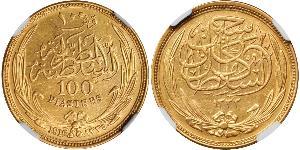
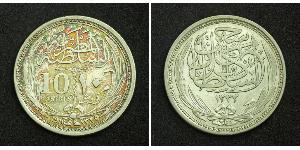
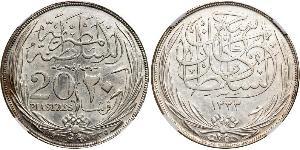
| Sultanate of Egypt (1914 - 1922) | Link to Wikipedia |
Sultanate of Egypt: A Numismatic Bridge Between Empires
Welcome visitors from the history and numismatics sections.
Welcome to a gallery that does not display heavy armor or grand monuments, but rather delicate metal artifacts forged during one of the most pivotal eras in modern Egyptian memory. The Sultanate period (1914–1922) represents a fascinating "numismatic bridge." It is an era defined by transition, where coinage served as both currency for daily commerce and silent ambassadors speaking to international audiences about sovereignty.
Historical Background
The genesis of the Sultanate was inextricably linked to the chaos of World War I. As European powers realigned their spheres of influence, Great Britain moved decisively into Egypt's orbit during 1914 to secure its strategic interests and supply lines for cotton and wheat. The transition from a "Khedive" (a semi-vassal title under nominal Ottoman rule) to a "Sultan" was designed by London to assert control without formally annexing the territory. For our collectors, this historical context is vital: coins minted during these turbulent years are effectively diplomatic instruments.
The narrative here changes rapidly after 1918. The rise of Egyptian nationalism, fueled in part by demands for self-determination echoing across Europe, created an atmosphere where authority became fluid. A new "Wafd" delegation emerged to negotiate independence, challenging British administration and sparking the revolution that would eventually dissolve this specific state form in 1920 (the Sultanate officially ended as a protectorate status was formally removed only later). The coins struck during these years tell a story of a nation striving for its identity. They were not merely objects of value; they carried political weight, representing either the British "Protector" or the emerging local leader who declared independence from Constantinople.
Currency and Coinage History
During this brief window, Egypt's monetary system was caught in a tug-of-war between ancient tradition and modern reform. While the Khedivial coinage relied on gold dinars to trade internationally, Britain pressed for a standardized silver currency that could be used across Africa without friction against French Francs or German Marks.
The evolution of money during this period reflects British oversight of Egypt's finances. However, local economic necessity dictated that these coins circulated alongside the traditional "Piastre" and gold dinar standards already known to merchants in Cairo and Alexandria. This era was one of consolidation rather than chaotic fluctuation; unlike some colonies where hyperinflation destroyed currency value, Egyptian coinage remained generally stable, thanks to British control over public debt management.
Coin production continued largely out of necessity for the war effort. Requisitioning foodstuffs and organizing labor corps required a reliable medium of exchange that functioned seamlessly across borders with Allied troops stationed in Egypt. The currency history here is characterized by "continuity"—a theme collectors often find soothing but intriguing, where old designs were struck anew just as political winds shifted from Ottoman allegiance to British protectionism.
Mints and Coin Production
The heart of production remained the Cairo mint (and Alexandria under wartime urgency). Unlike earlier periods dominated by foreign mintage for purely local use, this era saw a shift toward more modern engraving techniques. The artistry reflects an interesting duality: British artistic sensibilities were superimposed upon ancient Egyptian subjects.
The visual style was clean and crisp—a departure from the sometimes cluttered designs of earlier centuries—reflecting the influence of European medallic arts popular at the time (similar styles found on German Kaiser coins or French colonial issues). Engravers utilized Pharaonic motifs, such as pyramids, sphinxes, and ancient tombs not just for decoration but to visually assert a distinct "Egyptian" heritage separate from Ottoman lineage.
Notable Coins
To assist collectors in understanding what defines this group's rarity and importance:
- The Hussein Kamel Transitions:
Hussein Kamel declared himself Sultan shortly after his uncle, Khedive Abbas II was removed. Because the political shift was sudden, coins bearing his portrait are scarce. They represent a unique claim to authority made within four years of declaring independence from the Ottoman Empire but under British military oversight.
- The 1920 Independence Transition:
A particularly sought-after type represents the shift toward Egyptian sovereignty before Fuad I fully established his reign. These issues, often found in high condition due to limited circulation or hoarding as political stability returned after World War One ended, are prized for their bold use of national imagery.
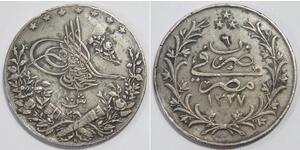
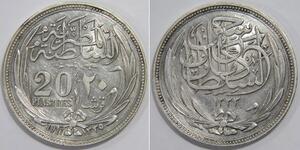
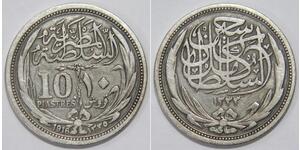
- The Silver Piastres:
During this protectorate era, the silver piastre was still in common daily circulation. Collectors value these most when they exhibit mint luster and sharp definition in their relief work on Pharaonic figures.
Cultural Legacy
The numismatic legacy of the Sultanate is one of resilience and reclamation. It tells a story where metal was used to project power during times of occupation, only for that imagery to be quickly repurposed as independence arrived in 1922.
- National Identity:
The art on the coins is perhaps their most enduring feature. As Egyptians pressed for self-determination led by figures like Saad Zaghlul, new designs sought to visualize a "New Kingdom" aesthetic that merged traditional history with modern statecraft.
- Symbols of Power:
The Sultanate's coinage stands as the final evolution before Egypt became an independent kingdom. The change in ruler (from Hussein Kamel to Fuad I) was not fully reflected on currency for long, making these coins artifacts of rapid political succession that collectors must carefully track.
For Collectors
The value of a Sultanate coin today lies not just in its rarity—though scarcity is high due to the short reigns and interrupted mintage—but in its historical significance. It captures the moment Egypt moved from being viewed as a semi-Ottoman province, through British occupation, and finally toward modern sovereignty.
A collection of this era serves as an introduction to early 20th-century numismatics: it is where history meets metal in a way that clearly marks one nation's assertion over another. It represents the bridge between old world empires (Britain and Ottoman influence) and new, independent identities found later under Fuad I and Farouk.
We invite you to examine these artifacts not just as monetary instruments, but as physical manifestations of a people defining their future during one of the most dramatic years in modern history.