| View |
| preceded by | ||||
|
||||
| China | ||||||||||
|

| succeeded by |
| China | Link to Wikipedia |
China: History, Coinage and Collectibles
Historical Background
To understand the coinages of this vast civilization, one must first appreciate a history that spans millennia, rooted in deep agricultural tradition and complex social stratification. Long before paper currency became the dominant medium for daily exchange, trade across the Central Plains relied on metal standards established by early dynastic rulers.
The economic narrative begins with barter systems involving livestock, shells like sea cowrie, and heavy stone weights used to measure grain in agricultural markets. These primitive forms of value eventually gave way to state-controlled bronze ingots cast into standardized shapes during the Spring and Autumn period (c. 7th century BCE). This evolution reflected a society moving from feudal fragmentation toward centralized imperial power.
The unification under Emperor Qin Shi Huang in the late third century BCE marked a turning point not just for politics, but for commerce. He standardized weights and measures across his empire to facilitate trade along the Silk Road and internal riverine networks connecting the Yangtze basin with the north. This centralization ensured that imperial decrees were backed by tangible currency standards.
Cultural development further shaped economic practices. The rise of Buddhism in the medieval period introduced concepts of merit-making, where wealthy patrons commissioned religious artifacts or donated metal to temples—a practice that created a unique class of numismatic art objects. Additionally, as commerce expanded into maritime trade routes during the Song and Yuan dynasties, China became an international trading hub, necessitating silver standards for global exchange while maintaining domestic copper coinage.
Currency and Coinae History
The evolution of Chinese money is defined by its transition from cast metal ingots to circular coins with square holes. The bronze cash of the Han dynasty established a uniformity that would define currency for centuries; merchants could travel vast distances knowing their copper rings were backed by imperial weight standards.
In later eras, particularly during the chaotic periods between dynasties or under regional warlords in the late Qing and Republican years (1890s–1940s), the monopoly on coinage fractured. While Beijing minted standard currency for the central government, other regions issued their own bronze coins to manage local shortages of silver bullion available to trade with foreign merchants.
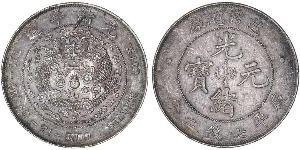
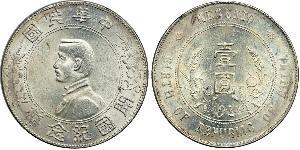
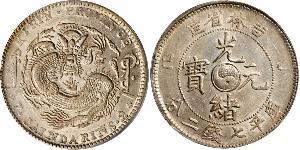
The introduction of paper money during the Song dynasty is legendary in economic history; however, historical instability often drove people back to holding tangible metal reserves. The collapse of imperial authority and the influx of American-style dollars into Shanghai markets in the late 19th century introduced silver coins with Western die-cutting technology but Chinese legends—such as "One Dollar" (壹圆) or similar denominations bearing dragon imagery—which collectors today prize for this hybrid aesthetic.
Mints and Coin Production
The production of coinage was strictly a state affair in imperial times. Central foundries were established to cast cash coins from copper alloys mixed with tin, lead, or zinc depending on the era's mineral scarcity. As metallurgy advanced into the Song period, artisans achieved higher levels of precision.
A key aspect for collectors is how mint marks appeared and changed meaning over centuries. In earlier dynasties like Han or Tang, a small square hole was drilled through each coin; it served to prevent melting down metal coins by merchants who sought the value in weight rather than face value—since imperial authority dictated that they had no intrinsic worth above their denoted number.
During later periods of fragmentation, such as during the Five Dynasties or Southern Song, mints were often operated to support local warlords and tax collectors. This decentralization led to a variety in weight standards for cash coins; some regional pieces weigh significantly less than standard imperial issues because minting conditions allowed them only limited amounts of metal.
Notable Coins
- Xining Tongbao (Northern Song): While cast during the early Northern Song period, these coins are prized today not just for their rarity but for the exceptional calligraphy found on many examples. Some were struck in copper with high tin content, giving them a bright sheen distinct from standard red-brown issues.
- Cu Chi (Copper) of Tang: These coins feature intricate designs including the Five Stars pattern on their reverse side. The imagery depicts stars and dragons to ward off evil spirits during trade, a cultural blend of religion and commerce that remains fascinating.
The most sought-after issues for collectors often come from transitional periods between empires. When an empire falls, mints usually produce coins with legends referencing the previous dynasty before switching allegiance to new rulers; these mixed-legend pieces provide physical evidence of a country in flux.
- Silver Dollars: The Qing-era silver dollar was used for international trade. While some were imported from Japan or Mexico, domestic issues bore Chinese legends and dragon motifs on the reverse side with intricate details that show mastery of minting technology before the shift to modern machine strikes.
Cultural Legacy
The design of a coin in ancient China was never merely functional; it was an artistic statement meant to project imperial legitimacy. Calligraphy on coins is central to understanding Chinese aesthetics, where every character must be balanced and elegant, even under the pressure of high-speed casting presses used during emergency mints.
In traditional culture, metal currency itself held spiritual value. The "copper cash" (铜钱) was believed to contain positive energy or qi because of its connection with earth spirits in Daoism—specifically that buried coins could ward off evil spirits from homes or graves. This explains why collectors find thousands of coin caches preserved within earthen jars sealed inside tomb structures across the country.
The Philosophy Behind the Art:
- Symbols like dragons, phoenixes (symbols of empress), and clouds represented high aspirations for rulers. On lower denominations found in everyday markets, these symbols were often replaced with auspicious phrases wishing wealth or good fortune.
Coin legends also reflect the political structure; during peaceful times under strong central rule (Tang Song Ming), all coins bore only imperial decrees. In rebellious periods like late Qing and warlord China, coinage became a tool for propaganda to rally troops or assert independence from established regimes.
For Collectors
The collection of Chinese numismatics offers an opportunity to explore the entire arc of human history in metal. While modern currency is paper-based and digital, collectors today can appreciate ancient coins that survived through centuries of warfare, hoarding practices during famines, or burial rituals.
- Rarity often lies with regional issues: local warlord copper cents issued between 1912-1940 show incredible variety in legends and portraits. Finding a coin from the chaotic era before China unified under Mao allows you to see how different regions competed for trade rights.
Beyond monetary value, these artifacts serve as historical windows into an empire that defined much of ancient Asian culture through philosophy, technology (gunpowder invention), and art. Whether tracing the lineage from early bronze weights to machine-struck silver dollars in Republican Shanghai, Chinese coinage remains one of the most visually engaging categories for those with a passion for history.
The enduring appeal lies not just in their scarcity or weight but in the stories they carry about trade routes that connected East Asia with Europe and Africa. For anyone studying economic evolution through archaeology, this collection offers unmatched depth compared to other nations' ancient coinages.