| View |
| preceded by | ||||
|
||||

 Japan
Japan
|
||||||||||
|


| succeeded by |
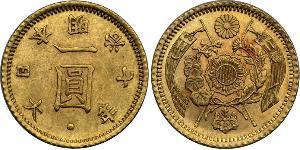
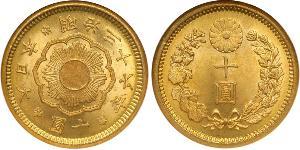
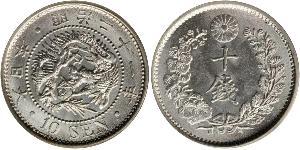
| Japan | Link to Wikipedia |
Japan: History, Coinage and Collectibles
Historical Background
Nestled off the northeastern coast of Asia, Japan occupies a unique position as an island nation where history unfolded in isolation from mainland China until forced into contact with Western powers. This geographical reality profoundly shaped its economic development and monetary evolution. For centuries following the Paleolithic era, the archipelago existed largely within feudal boundaries controlled by warrior aristocrats known as samurai and local lords called daimyō. During this period of fragmentation under the shogunate system, actual power was often decentralized, mirroring a lack of unified currency control across regions.
The turning point arrived in 1853 when American forces compelled Japan to open its ports to international trade. This event dismantled centuries of isolationism and marked the end of feudal rule, leading eventually to imperial restoration in 1868 during the Meiji period. The transition was rapid; seeking national prosperity through industrialization, modernization, and alignment with global powers, the Japanese government established a central banking authority that standardized exchange rates across previously fragmented domains.
This era of forced integration brought significant changes to commerce and culture as Japan shifted from an agrarian society dependent on local barter systems toward a capitalist economy modeled after European standards. The consolidation required for national defense against colonial empires further necessitated a robust monetary system capable of supporting international trade relationships with the United States, Europe, and Asia.
Currency and Coinage History
The story of Japanese money begins with ancient measures of value known as ryō. These were essentially weights used to quantify silver bullion or ingots rather than standardized minted pieces. As centralization grew during the Edo period, copper coinage began appearing to facilitate daily commerce among merchants and artisans in growing urban centers like Kyoto and Osaka.
A significant era of reform occurred under the Tenpō reign from 1842 until 1857 when domestic mints were established for the first time. The government introduced high-quality silver denominations often bearing Chinese-style characters, signaling a blend of tradition and emerging state authority before full Westernization.
The Meiji Restoration brought definitive change in 1870. Abandoning complex historical weights systems, Japan adopted a decimal system based on the yen in 1873. This transition mirrored broader global movements toward standardized banking led by Great Britain. The government demonetized old silver coins to clear the market for new legal tender backed by gold reserves and strict fiscal policy. By this stage, coinage had evolved from regional exchange tokens into potent symbols of national sovereignty.
Mints and Coin Production
The Tokyo Mint serves as the primary center for Japanese numismatic production throughout modern history, though historical mints existed in Kyoto and Osaka during earlier eras. Early minting methods involved casting copper pieces manually before precision striking techniques were mastered under foreign guidance.
Artistic characteristics evolved significantly over time to reflect changing cultural attitudes toward industrialization and nature. In the early twentieth century, designs became increasingly detailed with motifs drawn from folklore or imperial regalia as symbols of state power. Production centers utilized advanced technology during peace periods yet often paused output due to wartime mobilization efforts.
The craftsmanship behind these metal artifacts reflects a dedication to quality that distinguishes Japanese issues globally. Even small denominations bore high aesthetic standards intended for public recognition and confidence in the currency's value against foreign exchange markets. Techniques such as die preparation required immense skill, preserving details like fine reeding or complex inscriptions despite heavy circulation.
Notable Coins
- The Tenpō Kaihō Series
Born from necessity during a period of silver scarcity and reform efforts in the mid-nineteenth century. These coins bear intricate designs derived from Chinese numismatic traditions before Japan fully Westernized its own iconography. Collectors prize them for their historical transition value.
- Meiji Silver Yen Issues
Minted after 1870 featuring the Emperor as the central figure or allegorical scenes of industry and agriculture to promote modernization ideals. Their lustrous composition made them sought after among high-grade examples due to careful state control over metallurgy standards.
- Showa Gold Sovereigns
Often issued in limited quantities for diplomatic gifts, these coins carry national prestige through elaborate detailing on the obverse and reverse faces representing imperial lineage. They serve as testaments to Japan's industrial capacity before conflict interrupted their availability.
Cultural Legacy
The coinage of this nation acts as a tangible archive reflecting its cultural heritage, economy, religion, symbols, rulers or historical achievements across centuries. From early copper coins depicting traditional deities influencing folk beliefs to later representations honoring technological innovation and peace building following war.
Symbols often chosen for inclusion include motifs representing natural beauty like cherry blossoms signifying renewal alongside industrial machinery highlighting its postwar economic recovery narrative on banknotes that complement coin designs issued during peaceful intervals in the mid-century decades. These elements collectively convey a story of resilience, adaptation and national identity preserved permanently within metal form.
For collectors
Japan remains an important focus for serious numismatists today due to its unique artistic heritage combined with rigorous historical documentation practices maintained even during periods of scarcity or war. The variety spans from ancient silver used before modern standards were adopted through early twentieth century gold sovereigns and bronze issues marking pivotal moments in the Meiji and Showa eras.
The enduring appeal lies not only in rarity but also in how these artifacts narrate a journey from isolation to global economic leadership without losing its indigenous identity. For those who appreciate history, studying Japanese coinage offers access to profound shifts in political power while preserving cultural memory through visual language encoded on every denomination ever produced.