| View |
| preceded by | ||||||
|
||||||


|
|||||||
 French Fourth Republic (1946-1958)
|
|||||||

| succeeded by | ||||
|

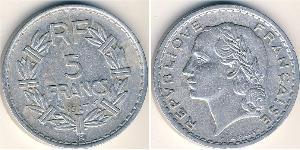
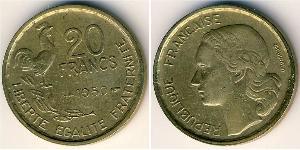
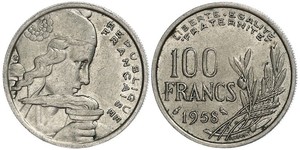
| French Fourth Republic (1946-1958) | Link to Wikipedia |
The Fourth French Republic: History, Coinage and Collectibles
Historical Background
Welcome to the collection history of a fascinating interlude in modern France that bridged two eras often defined by distinct constitutional frameworks. Established following the liberation from German occupation at the end of World War II, this period represented a significant attempt to rebuild national institutions on democratic foundations after years of authoritarian rule and conflict. The year 1946 marked not just a political beginning but a profound economic rebirth for France. Following the devastation of war, industrial production had stagnated while the banking system required stabilization against hyperinflation that threatened earlier currency stability.
The cultural landscape was defined by a search for identity and unity within an empire rapidly changing shape on the world stage. This era saw the gradual decolonization processes beginning to take root as self-governance movements gained momentum in North Africa and Indochina, which profoundly altered trade relationships and economic flows that would later influence monetary systems.
The political transition from one regime to another created a unique environment for collectors interested in understanding how nations redefine themselves through symbols of state power. The constitution written during this time sought to establish robust institutions capable of managing the complexities of modern democracy, yet these ambitions had to be balanced against severe economic constraints faced by all post-conflict states.
Currency and Coinage History
The evolution of money during this era reflects a struggle between traditional metal coinage and the practical needs of reconstruction. Immediately following 1945, France struggled with significant inflationary pressure which led to heavy reliance on paper currency known as francs libres before stabilization was achieved later in the decade.
Metal coins for general circulation were often scarce during this period compared to earlier eras because minting priorities focused on stabilizing value and ensuring liquidity rather than producing standard bullion pieces. This scarcity creates a specific dynamic within our hobby community: finding well-preserved examples from these years can be exceptionally challenging, as much of the available coinage consisted of older stock re-circulated or base-metal denominations produced in small quantities.
During this transitional phase between established empires and modern republics, monetary policy often shifted to support rebuilding efforts rather than preserving traditional coin production for circulation purposes. Consequently, high-denomination gold issues from the mid-century are generally associated with Fifth Republic reforms that followed later de Gaulle's return to power.
The currency evolution also included specific attention to colonial territories where distinct monetary systems were being reformed alongside independence movements in North Africa and Southeast Asia. These separate currencies often bore symbols linking them back to French statehood, serving as a numismatic bridge between imperial history and modern sovereignty.
Mints and Coin Production
The minting infrastructure during this time was centralized yet burdened by the logistical challenges of recovery. The national facilities primarily focused on producing proof coins for diplomatic relations rather than standard circulation strikes, which were largely handled through paper money issues managed at regional level.
Mint traditions from earlier periods continued to influence artistic direction even as industrial capacity struggled against post-war labor shortages and raw material costs. Designs often utilized established motifs that had been used during the previous republic but with subtle variations in metal purity or finish intended for diplomatic gifts rather than everyday commerce.
This focus on quality over quantity meant that many pieces surviving today are proof examples created specifically for collectors at high-level government events, which explains why museum-quality specimens from this era often possess exceptional detail despite being issued during a period of economic difficulty. The artistic standards maintained by the mint ensured these proofs remained technically excellent representations of French republican symbols.
Notable Coins
We turn now to some specific pieces that illustrate the unique historical context without relying on detailed catalog numbers or market values. Perhaps most significant are silver medals struck between 1946 and 1958, which were produced in varying qualities for diplomatic exchanges celebrating national reunification.
- The Marianne Head Series:
This series continued designs used during the late Third Republic but carried new dates reflecting post-war democracy. The historical context involves rebuilding French identity as a republic committed to liberty and secularism, symbolized through this iconic figure representing freedom.
- The Proof Silver Dollars:
Circulation was rare for silver dollars during these years due to economic constraints. Collectors often encounter pieces that were struck specifically for diplomatic missions or high-grade sets. The design features focus on classical republican imagery while subtly incorporating post-war reconstruction elements.
- The Colonial Issues:
Coinage produced in colonies during this transitional period often carried different inscriptions related to independence movements, serving as historical artifacts reflecting changing geopolitical boundaries. These pieces provide valuable insight into the economic ties that bound former territories even after political separation began.
Cultural Legacy
The coinage of this era reflects a culture focused on reconciliation and rebuilding rather than expansion or imperial dominance. Symbols used in these coins emphasize civic values such as justice, liberty, and secularism, which became central to national identity reconstruction after the trauma of occupation.
This legacy is visible in how design elements shifted from earlier militaristic motifs toward more peaceful representations suitable for a democratic society emerging from war-torn conditions. The numismatic record serves as a tangible testament to France's transition back into global influence through financial stability rather than territorial control.
For Collectors
This period remains significant because it represents a bridge between two eras of distinct political significance and monetary reform. While standard circulated metal coins are rare, those specimens found today offer unique opportunities to own tangible history from France's democratic rebuilding phase.
The historical context provides depth for collecting beyond mere visual appreciation as each piece connects major themes like post-war reconstruction economic recovery national identity reformation. Whether you seek diplomatic proof strikes or early stabilization pieces from this period of transition, these numismatic items stand as quiet witnesses to a pivotal moment in modern history.