| View |
| preceded by | |
|
|||||||
 Kingdom of Portugal (1139-1910)
|
|||||||


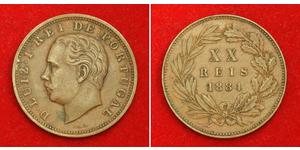
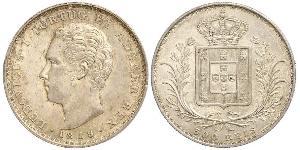
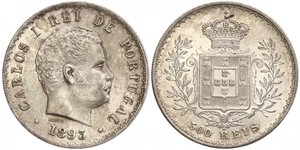
| Kingdom of Portugal (1139-1910) | Link to Wikipedia |
Kingdom of Portugal: History, Coinage and Collectibles
Historical Background
The story of the Kingdom of Portugal is one written in two distinct scripts: ink on parchment documenting treaties and battles, and metal stamped with mint marks recording trade flows. It began as a rugged frontier kingdom along the Minho river but rapidly transformed into a maritime empire that would redefine global commerce during the Age of Discovery. This evolution fundamentally altered the economic landscape not just for Portugal, but across Europe and Asia. The early centuries were defined by consolidating borders under kings like Afonso I, establishing defensive lines against Moorish retribution in Al-Andalus territory southward to Lisbon.
The defining characteristic that shaped this nation's history was its obsession with the sea. Unlike continental neighbors who built fortifications on land walls and castles of stone, Portuguese kings turned outward toward the Atlantic horizon. This maritime ambition drove a shift from agrarian coinage based on local silver deposits toward systems backed by bullion arriving from distant trading hubs like Calicut or Goa. The history here is less about dynastic squabbles found in battlefields across Northern Europe and more about securing trade routes that demanded standardized currency for paying crews, bribing rulers, and buying spice cargoes.
Culturally, the kingdom developed a unique hybrid identity blending Christian tradition with Moorish administrative efficiency. This cultural fusion is often visible even today in the architecture of its cities like Évora or Sintra, but also stamped onto metal coins where artistic styles shifted from Romanesque to Gothic and eventually Baroque influences.
Currency and Coinage History
The evolution of money in this region mirrors the broader narrative of European economic integration. In the medieval period, coinage was often localized until trade with Europe became too vast for barter or local silver coins to suffice. The Portuguese adopted a solidus-based system early on before transitioning to the 'Real' which divided gold into fractional units that would become standard across their empire. Initially, currency served primarily as internal tax collection and state payment.
A major milestone occurred during the fifteenth century when Portugal began minting specifically for international commerce rather than local circulation alone. By allowing a more open flow of coins from colonies like Goa and Mozambique into Lisbon, they created one of Europe's first globally circulating monetary standards. Over time, as gold discovered in South American veins flowed back through Iberian waters to European ports, the Portuguese crown standardized their silver denominations to compete directly with Spanish pieces of eight which dominated global trade at the same period.
This economic pressure drove significant reforms throughout subsequent centuries where mints were tasked not just with producing change for daily shopkeepers but issuing heavy gold and silver bullion suitable for trans-oceanic voyages. These policies allowed collectors today to see a distinct lineage connecting early medieval local tokens of value through royal decree, eventually evolving into the modern monetary systems used well past 1902 when they transitioned fully away from metallic standards.
Mints and Coin Production
Lisbon served as the heart of production for nearly every significant reign in history. The mint there operated within fortified precincts where skilled masters employed sophisticated die-making technologies that rivaled their counterparts across Europe during the renaissance period. Artistic characteristics here often displayed a distinct lack of political propaganda compared to rival French or German states; Portuguese coinage tended toward simpler heraldic devices and religious iconography focusing on Saint Vincent.
Other production centers existed within borders, occasionally utilized for regional needs such as silver from Évora in mining areas during times when Lisbon capacity was strained by wartime demands. The technology evolved rapidly here to accommodate the weight of gold imported daily; new presses were installed often funded directly through profits generated on trade monopolies over spices.
The artistic traditions are also unique where many designs feature hand-painted details or gilded finishes that survived centuries because they were struck with such precision in Lisbon. This was a tradition carried forward during the Baroque period when mints under Portuguese oversight produced coins bearing elaborate floral wreaths and complex armor on royal busts that still define what collectors consider 'fine art' issues today.
Notable Coins
Several denominations stand out for their historical weight or rarity in collections. Among the most celebrated are pieces minted specifically during the era of maritime exploration when early cruzados were needed to pay crews returning from Indian expeditions. These coins often featured simplified designs that allowed mass production despite high volume requirements.
- The transition from silver to gold coinage marked by specific mints in Brazil shows how colonial production influenced home currency policy.
Cultural Legacy
To the eye of a collector, these items are not merely financial instruments but cultural artifacts that reveal the soul of an ancient empire. The designs often include crosses and saints referencing the Catholic faith which permeated daily life in every coastal village from Galicia to Goa.
- The shield used as reverse ornamentation combines Christian symbols with traditional heraldry found across Europe, signaling a kingdom proud yet connected.
- Coin surfaces reflect economic conditions where gold scarcity during certain periods led to simplified designs or altered denominations that reveal inflation pressures of the time.
For collectors
The Kingdom's coinage remains important today because it represents a unique bridge between medieval craftsmanship and modern monetary theory. Collectors value these issues for their historical weight as well as condition, where many gold doubloons from Portuguese colonies are often rarer than expected due to heavy circulation in distant markets before they were hoarded or melted.
- The artistry found on later crowns offers an aesthetic that distinguishes them sharply against similar Spanish issues.
- Rarity factors here depend heavily on how trade shifted with war rather than simple production stops. For hobbyists seeking deep historical connection, these coins offer a window into the lives of mariners and merchants who built one of history's largest maritime empires.