

| Heinrich Friedrich Karl vom und zum Stein | Link to Wikipedia |
Heinrich Friedrich Karl vom und zum Stein (1757-1831): History and Coinage
Welcome to a study of Baron Heinrich Friedrich Carl von und zu Ste in. As we examine artifacts from this era, one finds that this statesman stands as a cornerstone between the old feudal order and modern Germany.
A Life of Reform
Born into an ancient Franconian family near Nassau, Stein’s intellectual journey began at Göttingen where he explored jurisprudence alongside English history. By 1780, he entered Prussian service under Frederick the Great, eventually rising through administrative ranks despite conservative opposition.
The turning point arrived after the Battle of Jena in 1806. Deposed and recalled due to his refusal to accept a standard ministry post that compromised national dignity, Stein found new purpose upon being summoned back by King Frederick William III following Napoleon’s defeat at Tilsit. As he restructured Prussia from its bankruptcy:
- The October Edict of 1807 abolished serfdom and freed peasants.
- Noble exemptions to land taxes were removed, subjecting them to equal imposts.
- Municipal systems allowed local self-governance in commerce and industry.
To his contemporaries who admired Frederick the Great for military power, Stein offered a vision of strength derived from administrative justice. He argued that Prussia could not be great as long as talented citizens were excluded by caste or lack of land ownership freedom. This philosophy laid the groundwork for future German unification.
Nomismatics and Representation
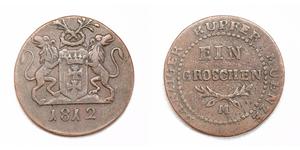
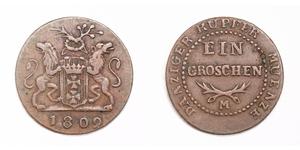
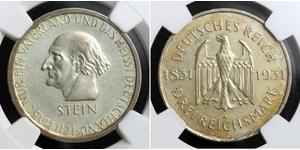
The connection between Baron Stein and currency is historically specific rather than common circulation during his lifetime, where royal portraits dominated silver thalers. He does not appear on standard coins of the Prussian crown but rather in medals struck following restoration efforts or modern commemorative series celebrating German administrative history.
Coinage for History
Collectors often prize these items less for face value and more as historical markers of resistance against feudalism. Early examples serve to distinguish the transition period where Prussia began minting currency reflecting internal freedom rather than just monarchical authority. Modern issues featuring his profile connect contemporary metal art with 19th-century social liberty.
For those who collect, these pieces represent a narrative shift from divine right rule toward constitutional citizenship. While not found on every cabinet drawer like the sovereigns of later empires, finding original examples or historical medals adds depth to understanding how financial policy and human reform traveled hand in hand during the Napoleonic epoch.


