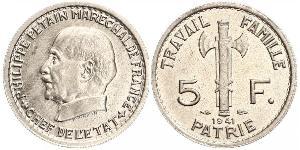
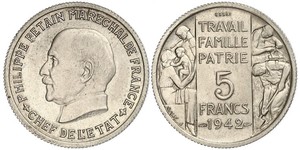
| Philippe Pétain | Link to Wikipedia |
Philippe Pétain (1856–1951): History and Coinage
The Lion of Verdun and Controversial Leader
Welcome to this exploration of Marshal Philippe Pétain, a figure whose life bridges the golden era of French military tradition with one of history's darkest political turns. Born in 1856 into humble peasant roots, he rose from obscurity to become Commander-in-Chief during World War I. His decisive leadership at Verdun earned him the title "the Lion of Verdun." Following his retirement after a long service career that included multiple government minister roles, history turned against France in 1940.
In June 1940, with the nation collapsing under Nazi advance, Prime Minister Paul Reynaud recommended Pétain for leadership. The Parliament subsequently voted to transform the Republic into an authoritarian State based at Vichy. Despite his age of eighty-four and prior heroism during World War I, he became head of state leading a collaborationist regime alongside Axis powers.
Pétain’s path was defined by distinct phases: military brilliance in the trenches, political stewardship under pressure to survive war, and ultimate conviction for treason after 1945. He remains one of history's most complex figures—once an unshakeable defender of Parisian honor against German invasion, then a controversial collaborator who survived only because he was old enough not to face execution initially.
Relationship to Coinage
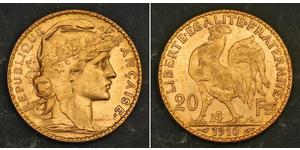
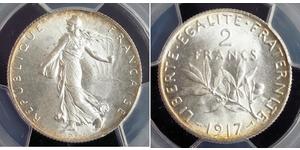
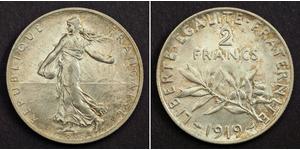
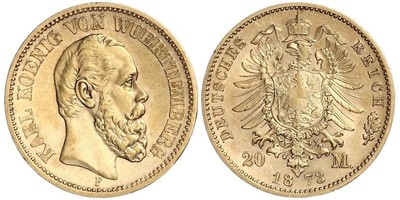
The numismatic legacy of Marshal Pétain is distinct from his counterparts in other eras. Unlike figures such as Louis XIV or Napoleon III whose likenesses adorned currency for generations, standard French sovereign coinage did not prominently feature Pétain's head during the occupation years.
- Vichy Era Issuance: While banknotes issued by Vichy France utilized specific iconography to symbolize national continuity under occupation, circulating coins largely avoided explicit depictions of controversial political figures to maintain some semblance of traditional French republican values that the new regime hoped would still appear legitimate.
- Rarity and Context: Consequently, any numismatic artifacts directly associated with Pétain are often found in banknote series or specific wartime currency tokens rather than standard circulating gold, silver, or bronze coinage. His image appeared primarily as propaganda to bolster authority when France faced total military occupation.
- Post-War Status: Following his trial and life imprisonment for treason until 1951, state mints ceased any official representation of him entirely upon liberation in 1944.
Why Collectors Value These Coins
For the historian-philhellene or modern collector, items linked to this era offer a unique opportunity to examine how money was used as a tool of propaganda. The historical significance outweighs common monetary metrics here.
The attraction for enthusiasts lies in their rarity and connection to one of France's most turbulent chapters in history.
- Narrative Depth: Possessing currency from this specific period connects the holder directly to Vichy administration, exploring a regime defined by survival rather than traditional governance.
- Educational Value: These artifacts are excellent teaching tools regarding how nations issue money during collapse and occupation. They illustrate why France did not standardize portrait coinage during WWII in favor of notes with less controversial designs compared to other Axis powers or allies.
In summary, collecting Pétain-related currency is an act of archival history rather than typical hobby pursuit. It encourages collectors to understand the full spectrum of 20th-century political finance and the profound influence military leaders held over national identity before their fall from grace in post-war tribunals.