| Frederick William, Grand Duke of Mecklenburg-Strelitz | Посилання на Вікіпедію |
Frederick William, Grand Duke of Mecklenburg-Strelitz (17 October 1819 – 30 May 1904): History and Coinage
Frederick William stands as a significant figure in the history of northern German nobility during the mid-to-late nineteenth century. Serving as Grand Duke from 1860 until his death, he presided over Mecklenburg-Strelitz through one of Europe's most transformative political eras: the unification of Germany. His lineage connected him to European royalty through a marriage at Buckingham Palace in 1843 with Princess Augusta of Cambridge, embedding him within the broader tapestry of international aristocracy.
Beyond his diplomatic ties and cultural interests in art law, he was also a substantial landowner whose personal assets represented over half of the Grand Duchy. His reign coincided with major geopolitical shifts as Mecklenburg-Strelitz transitioned from isolation to membership within both the North German Confederation and later the German Empire. These political transformations directly influenced his official currency issues.
Relationship to Coinage
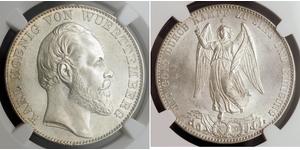
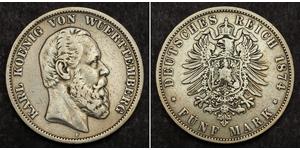
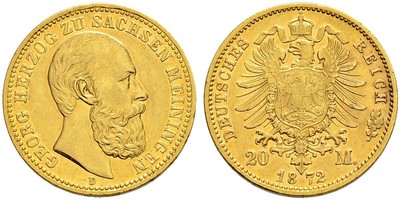
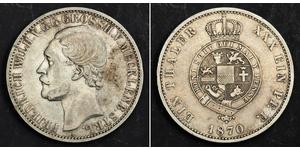
The coinage associated with Frederick William emerged during a time of profound monetary realignment across Central Europe. As Mecklenburg-Strelitz integrated into national structures, local currencies bore the sovereign's portrait alongside imperial emblems and legends in German, reflecting his dual loyalty as both a Grand Duke and an Imperial citizen.
Possibly depicted on silver coins such as Thalers or smaller change denominations circulating within the confederation system, these pieces often featured classical portraiture styles common to Prussia and neighboring states. The portrait of Frederick William was not merely decorative; it served as a seal of state authority during an era where sovereigns legitimized their rule through tangible monetary presence.
The issuance shifted from purely regional issues to those acknowledging the wider German context, with coin designs evolving alongside imperial mint standards post-1871. While specific design variations exist across different mints and years within his long reign, they consistently highlight a monarchical figure who helped navigate the complex relationship between local autonomy and national identity.
Why Collectors Value These Coins
Coin collectors are often drawn to these pieces due to their historical narrative rather than solely intrinsic metal value. Mecklenburg-Strelitz issues represent an important bridge in numismatics, illustrating the decline of purely feudal currencies and the rise of national monetary systems.
- Rarity: Coins from minor states often have lower mintages compared to major imperial issues, making them prized specimens for specialists in European history.
- Educational Value: Examining these coins allows students and hobbyists to visualize the political boundaries of a time when local dukes influenced national policy.
- Nostalgia for History: The artistry found on Mecklenburg-Strelitz silver is often superior to standard imperial issues, appealing to those seeking historical craftsmanship over mass production styles.
In conclusion, the legacy of Frederick William remains etched in both history and metal. For enthusiasts exploring numismatic collections, understanding his role provides a window into how small states contributed to the formation of modern Germany.