| Count Leopold Anton von Firmian (1679 - 1744) | Link to Wikipedia |
Leopold Anton von Firmian (1679–1744): History and Coinage
Welcome to a closer examination of one of the most influential religious leaders within the Holy Roman Empire during the eighteenth century. Leopold Anton Eleutherius Freiherr von Firmian was Prince-Archbishop of Salzburg, governing from 1727 until his death in 1744. He presided over a territory that functioned as both an ecclesiastical duchy and sovereign state within the empire boundaries.
Born into the distinguished House of Firmian, Leopold dedicated his life to strengthening Catholic dominance in regions populated by Protestant communities. His tenure was marked by strict reforms intended to restore what he considered the true spiritual power of the Church. Most notably, he issued an edict forcing thousands of Protestants to convert or face exile between 1731 and the early 1740s. This event reshaped demographics in Central Europe and established a legacy that continues to resonate among historians interested in religious tolerance during the Enlightenment.
The Relationship Between Firmian and Coinage
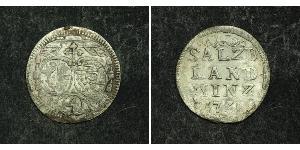
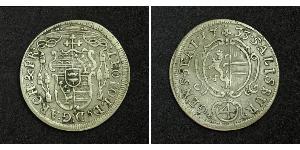
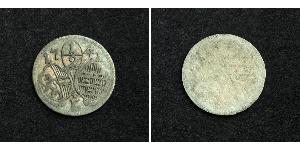
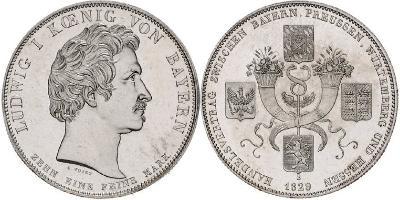
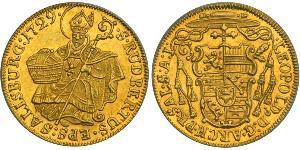
In the context of numismatics, Prince-Archbishops held sovereign rights within their territories, allowing them to mint currency bearing their names. Coins depicting Leopold Anton von Firmian or his coat of arms were issued by the Principality of Salzburg during his lifetime. These are not merely tokens; they represent official government issues circulating alongside Austrian and Bavarian florins.
Coinage from this period reflects a unique intersection of temporal power and spiritual authority. Unlike secular monarchs who used coin portraits to assert dominance, ecclesiastical rulers often featured mitred heads or heraldic symbols emphasizing their dual role as both churchmen and governors. Collectors encounter these pieces during auctions focusing on Austrian provincial history.
The decision to place his likeness or arms upon metal currency underscores the state's independence from direct imperial mint oversight. When a collector holds a Salzburg florin of Firmian, they are holding physical evidence of an era where church leaders wielded military force and legislative power within their borders before political shifts eventually dissolved such autonomy.
Rarity and Appeal for Collectors
Enthusiasts value these pieces not only for the history but also for their condition in circulation. Because mint operations were often localized and production run sizes varied, many surviving examples exist in lower grades rather than pristine museum quality. This makes accessible to junior collectors who are building foundational sets of Austrian silver.
The historical weight is undeniable; these coins serve as tangible artifacts linking the physical economy of eighteenth-century Europe with high-stakes political conflicts regarding religious freedom and sovereignty.
- Rarity: Silver florins from specific years carry a premium due to scarcity compared to common Austrian issues.
- Artistic Detail: Engravers often added intricate border designs that highlight the craftsmanship of pre-Revolutionary mints.
- Contextual Value: A key item for those researching ecclesiastical states in Europe before 1780.
Exploring these coins allows history enthusiasts to understand how power was physically manifested on metal, bridging the gap between political edicts and everyday life across borders of modern nation-states. The legacy of Firmian remains preserved not just in church records but in the copper florins held safely within private collections today.