| Aemilian (207-253) | Link to Wikipedia |
Marcus Aemilius Aemilianus (c. 207 – 253) History and Coinage
Marcus Aemilius Aemilianus stands as a singular figure in the turbulent history of late antiquity, reigning briefly during what historians call the Crisis of the Third Century. Born an African native from Girba in modern-day Tunisia, he rose to prominence not through noble lineage but by military prowess on the Danube frontier. As commander of the Moesian troops, Aemilian restored honor to the Empire after a succession of defeats against foreign invaders and domestic political instability.
His historical significance is defined by an incredibly brief yet impactful reign lasting merely two months in 253 AD. During this volatile period, traditional lines between generals and emperors dissolved. Acclaimed for his victory at Interamna Nahars against the Gothic King Cniva, he was declared emperor solely by his army rather than appointed or elected by senatorial decree.
The Emperor of the Goths, Issued on Imperial Currency
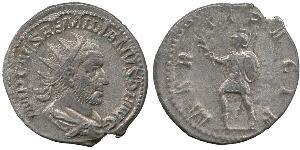
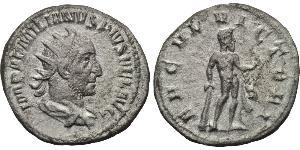
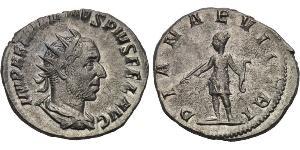
Roman coinage during Aemilianus' rule served as a powerful tool of political propaganda. Unlike some contemporaries who struggled to secure legitimacy through noble ancestry, his coins emphasized military strength and victory over barbarian enemies. During such short reigns in the third century, mints across the empire—including Rome, Antioch, and Mediolanum—often rushed production or ceased operations quickly depending on political survival.
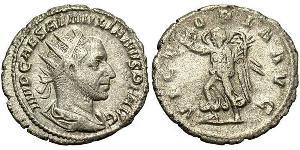
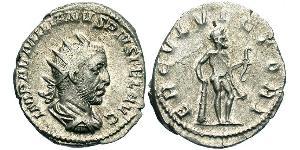
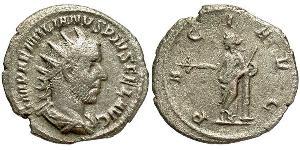
The denarii struck under Aemilian typically featured his head adorned with armor, contrasting sharply with the softer imagery often reserved for peaceful periods. This visual emphasis highlighted that he was a soldier-king who restored stability through force of arms rather than diplomatic compromise alone. The coins were issued during his lifetime to secure immediate support from troops and civilians alike as his larger army clashed against Trebonianus Gallus in central Italy.
Significance for the Collector's Cabinet
Coin collectors value Aemilian specimens primarily due to their extreme rarity. Because he was murdered by mutinous legions only one month after defeating his rival emperor, there is a minimal number of coins remaining from official mint strikes during his actual reign. Collectors often compare these pieces against the portraits of contemporaries who enjoyed longer rule.
- Rarity: The short duration of his power means few mintage events occurred before he fell to Valerian, ensuring that surviving examples are scarce in high grades.
- Historical Snapshot: Each coin provides a physical link to the end-of-third-century military crises and shifting allegiances within the imperial army.
- Cultural Context: These coins offer insight into how emperors were portrayed during times of civil war, where propaganda often had to be immediate and martial rather than idealized or peaceful.
Scholars appreciate these artifacts as rare examples from the era when military acclaim dictated imperial succession. For those examining ancient numismatics, this coinage represents a fleeting moment of triumph before the empire once again plunged into chaos with Valerian and Gallienus rising to take control.