| Adolf Frederick of Sweden (1710 - 1771) | Link to Wikipedia |
Adolf Frederick (1710–1771): History and Coinage
Welcome to our collection of artifacts from mid-eighteenth-century Sweden. Today, we focus on Adolf Frederick, a monarch whose legacy lies as much in the transition between political eras as it does in royal lineage. As King from 1751 until his death, he stood at a pivotal crossroads in European history: the decline of strict absolutism and the rise of constitutional governance.
A Gentle Monarch on Metal
Born into the House of Holstein-Gottorp and an uncle to Catherine the Great of Russia, Adolf Frederick ascended the Swedish throne at a time when his power was largely ceremonial. The Riksdag (parliament) held significant sway over him; he was effectively restricted by law from depicting himself as a warrior or exercising unchecked authority on coinage.
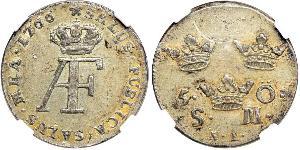
However, historical accuracy is vital for collectors and students of numismatics alike. While the political climate made grandiose displays difficult, Swedish mints still produced his portrait in Stockholm Tallar and Riksdaalers. Unlike his predecessors who appeared with crowns bejeweled and halos of victory around their heads, Adolf Frederick's portraits on coinage often reflect a more realistic, humanized approach to royalty during this specific period.
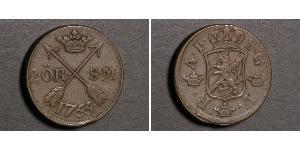
The coins from the mid-1750s were struck shortly after he attempted to reinstate absolute monarchy but failed. The metal itself tells the story of his cautious personality—a man described as scientific and artistic who favored woodworking over warfare. His coinage is not just currency; it represents a rare window into an era where kingship was being redefined by legal constraint rather than military might.
The Appeal to Modern Collectors
For the dedicated numismatist, Adolf Frederick presents unique challenges and rewards. First, these coins are part of a transitional series leading up to his son Gustav III's coup in 1772, which restored absolute rule.
You will notice that portraits become more refined under this reign as artistic standards evolved alongside the political shifts toward liberalism introduced by his wife, Queen Louisa Ulrika. Collectors prize these issues for their connection to a specific moment: just before modern Sweden's democratic foundations were fully laid, yet while it still looked outwardly European.
Finding high-grade examples of Swedish silver from 1750–1768 allows you to hold a piece of that constitutional experiment. The reverse designs often feature traditional coats-of-arms rather than battle scenes, reflecting the peaceful but turbulent times he navigated as ruler. By exploring this branch of your collection, you connect with a history where a weak monarch was actually quite influential in shifting economic policy and cultural liberalization.
We invite you to examine these pieces closely; they do not just circulate as money from that time—they are physical imprints of the "Gentle King" who paved the way for modern governance. Enjoy collecting history!