| John VI of Portugal (1767-1826) | Link to Wikipedia |
John VI (1767 – 1826): History and Coinage
The Clement: A Monarch of Two Crowns
Johannes Maria José Francisco Xavier de Paula Luís António Domingos Rafael, known in history as John VI or simply King John, was a pivotal figure during the tumultuous age of empire-building and dissolution. Born in Lisbon to Princess Dona Maria I and Infante Peter III, he ascended to his historic stature not by design, but through tragedy; following the death of his older brother from smallpox in 1788, the fifteen-year-old John became heir apparent. By the time Napoleon's forces invaded Portugal during the early nineteenth century, a reluctant monarch found himself fleeing across the Atlantic Ocean to Rio de Janeiro.
This displacement was not merely an escape but a reorientation of his entire political reality. Forced by circumstances and war in Europe, he transformed Brazil into a co-capital for almost twenty years between 1808 and his formal accession to Portugal proper. He returned as monarch only after the British threat receded, reigning over what is known historically as the United Kingdom of Portugal, Brazil and the Algarves from 1816 until his death in 1826.
The Relationship Between John VI and Coinage
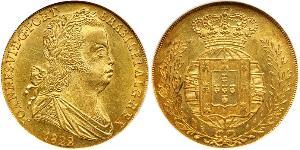
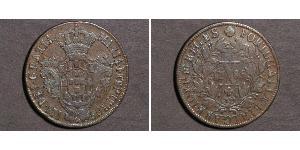
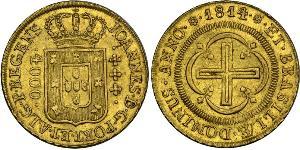
The portrait of this monarch appearing on currency was a direct reflection of the shifting political landscape. During the Napoleonic era (roughly 1807–1815) when he governed from Brazil while his mother ruled in Lisbon, special issues were minted that featured both territories under single sovereignty or during periods where Portugal's capital temporarily relocated to Rio.
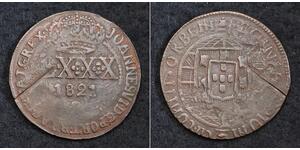
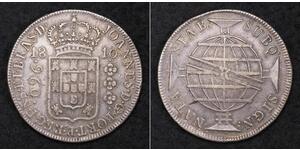
The coinage of this period is often divided between those issued for the Portuguese Empire and distinct Brazilian denominations. Collectors will find coins bearing the title "King of Portugal" alongside others explicitly acknowledging him as a titular Emperor following his son Pedro’s declaration of independence in 1822, before John abdicated to let that transition complete itself.
Why These Pieces Are Valued Today
A coin featuring John VI is attractive primarily because it serves as physical evidence of an empire navigating the complex waters of early Latin American nationhood. Unlike standard monarchs who reigned solely over a single territory, his reign represents a bridge between Iberian tradition and South American modernity.
- Narrative Connection: The coins capture a unique historical moment when European royalty was displaced by the military ambitions of France and found refuge in the Americas.
- Rarity: Issues from 1822–1826, which transitioned between his status as "King" and "Titular Emperor," are often sought after for their transitional nature.
Beyond market prices, the numismatic significance lies in seeing a man known to contemporaries as "the Clement." The softer, benevolent portrait style used on these issues contrasts with the severe imagery of his mother or British rivals. For history enthusiasts, holding one of John's coins is akin to holding a page from an atlas that maps not just land masses, but political boundaries redrawn by revolution and war.
In conclusion, exploring coinage attributed to King John VI offers insight into how nations define themselves against the pressures of global conflict. As you examine these pieces, look for subtle variations in titles or mint marks that denote whether a specific specimen was struck before 1820 (United Kingdom) or after Brazil's independence.