| Kavadh I (449-531) | Link to Wikipedia |
Kavad I (473 – 531): History and Coinage
Welcome to our examination of one of the most complex figures in Late Antiquity: Kavad I. As a Sasanian monarch ruling between the years 488 and 531, he represents a fascinating intersection of political upheaval and religious transformation. While early historians noted his reign as an era where the authority of Persian nobles was systematically dismantled to centralize royal power, numismatics offers a distinct visual record of this shift from aristocratic puppetry to absolute sovereignty.
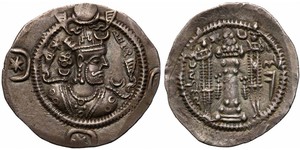
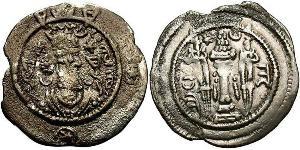
The historical backdrop for Kavad I’s rise is one of significant crisis. Following devastating defeats by Hephthalite raiders and internal noble rebellions during his father Peroz's reign, the Sasanian treasury was nearly bankrupted when Kavad ascended at merely fifteen years old. His early coins bear the visual stamp of this youthful accession; contemporary iconography emphasizes short whiskers rather than full beards common in later imperial portraits. This stylistic choice is historically significant. It marks a departure from tradition, suggesting a need for legitimacy and perhaps even signaling his reliance on new religious ideas that would eventually alter the state’s spiritual landscape through the Mazdakite movement.
The political entity issuing these coins was the Sasanian Kingdom of Iran. Unlike standard propagandist portraits found in later Roman or Byzantine contexts, Kavad's coinage reflects a struggle for legitimacy against powerful factions known as the wuzurgan. Early issues were likely minted under his regency by key supporters like Sukhra, effectively acting to stabilize regions before he could purge corrupt officials and reassert royal prerogative. The portrait on these pieces is not merely decorative; it serves as a declaration that while Kavad began as a hostage to court intrigue, the iconography eventually supported a king who successfully revived an empire often considered on its last legs.
For collectors of ancient numismatics and historical artifacts, coins bearing the name Qavād offer deep educational utility. The primary reason for their appeal lies in their rarity relative to later Sasanian types found at major hoards like those from Armenia or Iran proper. Because they often depict a specific youthful phase not seen elsewhere on contemporary media, these issues are highly prized by specialists looking to reconstruct the timeline of early 6th-century politics.
Beyond mere scarcity, these pieces connect viewers directly to pivotal moments in world history where empires clashed over trade routes and fortifications. A well-preserved specimen allows one to visualize a monarch who faced existential threats from both Hephthalite invasions eastward and Byzantine forces westward. Whether examining the wear patterns on the legend or the subtle differences in the bearded iconography, enthusiasts can trace Kavad’s transformation from deposed heir into a genius of statecraft under whom his son Khosrow would later usher in an era of golden age splendor.