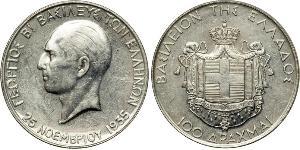
| George II of Greece (1890-1947) | Link to Wikipedia |
George II of Greece (1890–1947): History and Coinage
The Crown Prince as Head of State
King George II stands as a pivotal figure in modern European monarchy, navigating the turbulent waters between World War I and the Second World War. Born to Princess Sophia of Prussia, he was raised with extensive connections to royal families across Europe, which significantly influenced the artistic styles found on state currency during his lifetime.
Governed by two distinct political regimes—first as a minor sovereign under abdication and later after restoration in 1935—his coinage reflects periods of sovereignty interrupted by republican interludes. For history enthusiasts examining his legacy through currency, understanding the trajectory from royal exile to constitutional kingship provides essential context for interpreting the numismatic artifacts associated with his name.
The Monarch on Metal
Currency bearing King George II's likeness was primarily issued during two distinct periods: a brief initial reign interrupted by political upheaval, and a stable era following 1935. The Greek state maintained its mint operations in Athens while his government operated abroad from London after the Axis invasion of April 1940 until liberation later that decade.
The decision to feature royal portraits on circulating currency served several purposes. First, it reinforced national identity during times when sovereign authority was challenged by internal republican movements or foreign occupation forces. Second, these coins were often struck in London for use abroad while Greece faced invasion, preserving the continuity of state functions despite physical displacement.
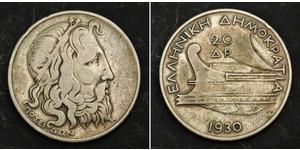
The portrait style evolved to reflect contemporary European standards of the interwar period, balancing classical traditions with modern iconography typical of Greek artistry. Collectors can find pieces dated between 1935 and his passing in London that carry distinct markings indicating their place of strike or mint origin.
Collections for Discerning Enthusiasts
Greek numismatics from this era attract significant attention due to the intersection of royal lineage, artistic craftsmanship, and wartime scarcity. Gold and silver pieces struck during his final years are particularly sought after because they represent a period where the monarchy functioned as both a symbol of heritage and a tool for financial stability among expatriate communities.
The historical significance extends beyond mere metal value; these items document the resilience of Greek institutions under pressure. For those beginning to explore this collection, focus on pieces that illustrate the shift from domestic control to exile governance, offering tangible evidence of how European currency circulated across borders during one of history's most dramatic conflicts.