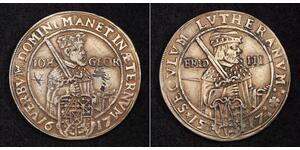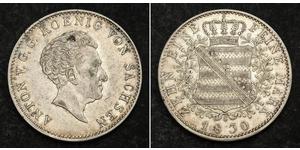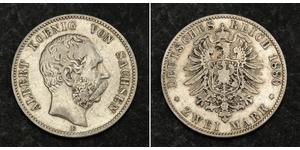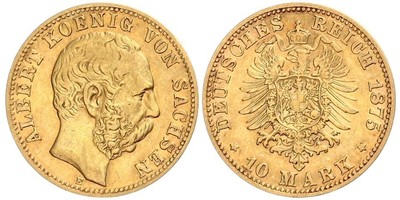
| George, King of Saxony | Link to Wikipedia |
George (1832–1904): History and Coinage
In the final decades of European monarchies, George emerged as a notable figure within Central German history during an era where sovereignty faced unprecedented change before World War One reshaped political landscapes across Germany. Born in Dresden to King John of Saxony and Princess Amalie Auguste of Bavaria, he ascended following his brother Albert in 1902 after serving previously under military command alongside imperial forces.
Briefly reigning until passing away at Pillnitz later that year, this tenure occurred during the German Empire period where kings governed within federal structures. Although specific dates mark significant historical moments for researchers examining dynastic lineages, these numismatic artifacts provide physical testimony to his state leadership role as King of Saxony.
The Monarch's Role on Currency
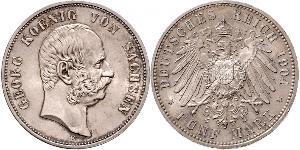
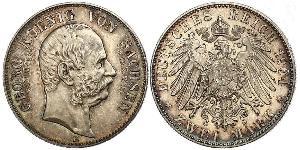
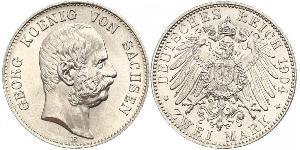
Saxony maintained its own monetary issuance while participating in broader imperial economic networks until political transitions occurred after 1918. The portrait placed upon official currency was not merely decorative but served to assert continuity of royal authority during turbulent times.
- Circulation Context: These items appeared primarily during his lifetime as active state leadership, rather than posthumous issues for general use in the manner seen with other historical monarchs. His image projected military rank and traditional stability onto silver or nickel pieces used by citizens within the empire's borders.
- Heraldic Elements: Portraits typically accompanied standard royal insignia consistent with Wettin lineage traditions, providing a visual link for viewers identifying Saxon rule despite changing political circumstances surrounding Germany’s unification.
Minted conditions varied by year and denomination to reflect his status as Generalfeldmarschall and active monarch within the Empire structure.
The Appeal of Collecting These Issues
Negative numismatists prioritize these items because they offer a tangible connection to an era where kings still governed but faced modernization pressures. The rarity stems largely from his short tenure compared to predecessors, creating scarcity in specific denominations without altering the metal's intrinsic value significantly.
- Rarity: Short durations often result in lower mintage totals for specific mint years and denominations relative to longer ruled figures like Frederick Augustus III who succeeded him. This naturally limits availability of dated pieces from his active reign specifically compared to others within a family tree study context.
Additionally, collectors interested in the history find these coins offer insights into how royal families navigated modernization pressures that eventually led to later democratic republics and deposition events throughout Europe during 1918. Studying these artifacts helps explain why they remain valuable pieces for specialized collections focused on central European late imperial transition periods.