| Sigismund, Holy Roman Emperor (1368 -1437) | Link to Wikipedia |
Sigismund of Luxembourg (1368–1437): History and Coinage
Beyond the imperial diadems and papal bulls that defined his age stood Sigismund of Luxembourg. The last male member of the House of Luxembourg, he ruled not only as Holy Roman Emperor but also across a fragmented map encompassing Bohemia, Brandenburg, Hungary, and Croatia. His life bridged critical eras in late medieval Europe: the aftermath of the Papal Schism following the Council of Constance and the rising military threat from Ottoman expansion on the Danube frontier.
The Emperor on Metal
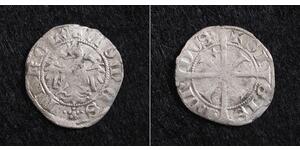
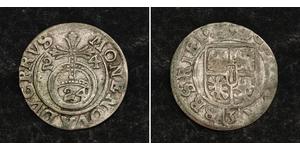
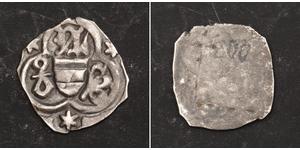
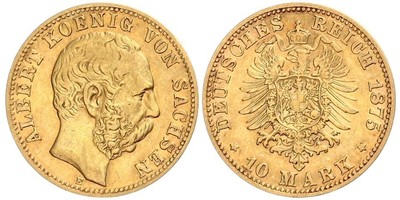
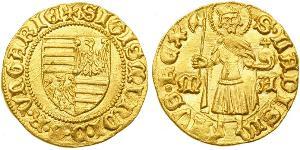
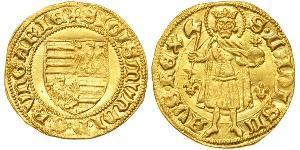
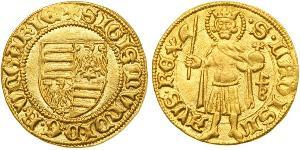
To understand the coins depicting Sigismund, one must appreciate his polycentric authority. As a result of this multi-national rule, minting centers operated in Prague, Nuremberg, and Buda under his administration. Coins issued during his lifetime served practical economic functions while reinforcing political unity among diverse territories such as Hungary and Germany. His portraits were often accompanied by specific iconography: the Imperial eagle for German lands or the Hungarian double cross. Notably, after founding the Order of the Dragon to combat Turkish advances following the Crusade of Nicopolis, this heraldic symbol frequently appeared alongside his bust on commemorative silver florins struck across the realm.
Narrative Value for Collectors
The historical value found within these pieces lies in their scarcity and iconographic complexity. Medieval coinage is a finite resource, preserving visual records of an era that existed before widespread photography or printed portraiture became common to the public. For enthusiasts studying the shift from medieval feudalism to early modern statecraft, Sigismund's currency offers tangible evidence of imperial ambition.
Preservation and Study
Collecting pieces related to his reign provides insight into the transition between dynasties that would eventually lead under Charles V. The condition of these ancient deniers or gold crowns tells a story of economic stability—or lack thereof—during turbulent decades. Rather than focusing on market price, collectors find significance in examining how Sigismund utilized currency as a tool for diplomacy and power projection across the borders his armies traversed.