| Bruttia Crispina (164-187) | Link to Wikipedia |
Bruttia Crispina (164 – 191 AD): History and Coinage
The End of an Era:
Bruttia Crispina serves as a pivotal figure in the late Roman Empire, marking the transition from the stability of Marcus Aurelius to the tumultuous reign of Commodus. Born into one of Italy's most prestigious aristocratic families originating from Lucania, she married her father-in-law’s son at sixteen around 178 AD. Her entry into Imperial history is defined by a significant lack: while an Augusta in title and holder of vast estates as dowry, Crispina failed to produce the necessary heir that would secure Marcus Aurelius's legacy. Following his death, Commodus ascended fully alone but faced increasing isolation from traditional Roman values.
Relationship to Coinage
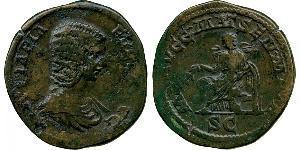
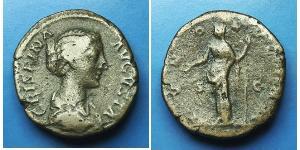
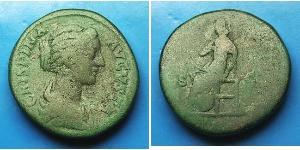
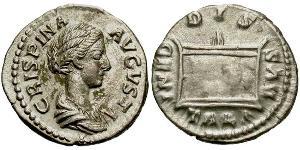
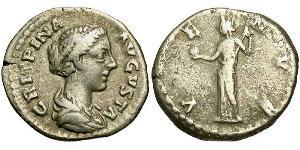
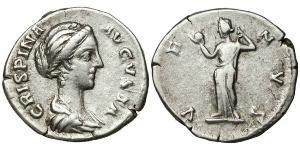
During her tenure, Bruttia was extensively honored through public imagery on currency issued across Rome and Lucania. These coins functioned as propaganda tools designed to project dynastic stability during a politically fragile time. Unlike military victories or administrative reforms often celebrated in ancient numismatics, Crispina’s portraits were accompanied by reverse legends emphasizing fertility rather than power. Numismatic evidence indicates that she appeared on issues bearing symbols of childbearing and hope, such as the goddess Diana Lucifera.
The coinage was issued primarily during her lifetime until approximately 182 AD when rumors suggest potential pregnancies may have been cut short or suppressed by court intrigue involving her sister-in-law, Lucilla. Following her banishment to Capri in 188 AD and the eventual end of her reign with Commodus’s assassination years later, she ceased appearing on currency shortly after her exile.
Why Collectors Value These Coins
The primary appeal for collectors involves the ability to visualize court dynamics that survive only as silhouettes in historical texts. Each coin depicting a portrait of an empress is rare because they represent specific political messages regarding Imperial succession and fertility expectations.
- Dynastic Context: Collectors seek these coins specifically for their association with the fall of Marcus Aurelius, as Crispina’s failure to reproduce highlights why Commodus was later targeted by rivals and eventually assassinated after ten years without an heir.
- Rarity and Imagery: Reverse types like Fecunditas holding a child are significant historical artifacts representing ancient public hope versus political reality. They offer insight into the shift from Antonine piety to Commodus's later erratic policies before he took a mistress named Marcia.
These pieces remain essential for understanding how early Roman history was consumed by its citizens, serving as tangible links between high aristocratic politics and popular culture in ancient Rome.