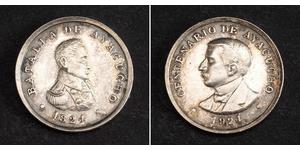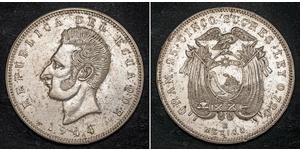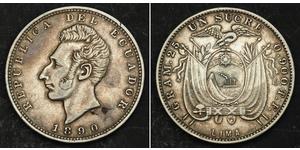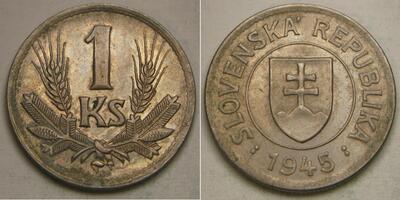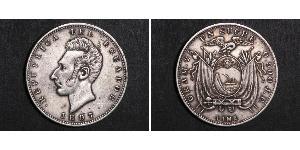
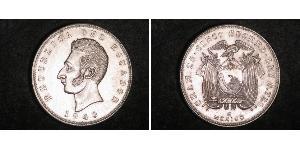
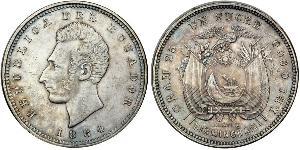
| Antonio José de Sucre (1795 - 1830) | Link to Wikipedia |
Antonio José de Sucre (1795–1830): History and Coinage
The Man Behind the Metal
Welcome to a detailed overview of Antonio José de Sucre, one of South America's most celebrated liberators. Born in 1795 near Cumaná into an aristocratic family with roots tracing back to Flanders, he entered military service against Spanish rule by age twenty-one.
Sucri served as the chief lieutenant to Simón Bolívar and played a pivotal role in securing independence from Spain across several nations. His strategic genius was most evident at the Battle of Pichincha in 1822, which liberated Quito for modern Ecuador, followed by his decisive victory against Royalist forces at Ayacucho in 1824 that secured Peru's freedom.
The true legacy connecting him to numismatics lies within Upper Peru. Following Bolívar's instructions, Sucri moved into the region early in 1825 and pacified resistance there before establishing an independent administration on his orders when he was inaugurated as president of Bolivia after Bolívar passed responsibility for its duty.
Sucre'Connection to Coinage
In the turbulent years following independence, newly formed republics sought symbols of sovereignty that represented legitimacy and peace. While Simón Bolívar is widely revered across Gran Colombia, Sucri became specifically identified with Upper Peru after serving as its provisional leader.
Coinage from this era shifted dramatically away from Spanish imagery to new Republican designs celebrating liberty. Coins depicting these national heroes appeared on denominations circulating throughout the region during and shortly after 1825. Silver pesos were often minted under his influence or in memory of his administration as the nation sought stability.
Sucri was not a frequent subject compared to Bolívar due to political tensions regarding his brief presidency before resigning in 1828, but later issues frequently honored him alongside the Liberator. This distinction helped national identity and recognized his military victories that prevented Peruvian expansion into Upper Peru.
The Collector's Perspective
Coin collectors value these artifacts because they represent a fragile moment of history when new nations defined their borders independently from colonial powers. Unlike currency which often bore royal portraits, Sucri' depiction signifies the birth of self-governance in Latin America.
- Historical Significance: These pieces serve as tangible reminders of independence victories that are otherwise abstract to modern readers looking for history through artifacts rather than textbooks.
- Rarity and Context: Issues from this brief transitional period offer unique insights into early republic economics, often minted with haste or using remaining dies modified for new designs.
For the historian of currency, understanding Sucri's narrative is essential to grasping why his portrait was immortalized on silver and gold. It is through these metal tokens that we continue to honor a soldier who forged modern statehood while balancing national unity against regional division during a time when borders were drawn by bloodshed rather than ink.