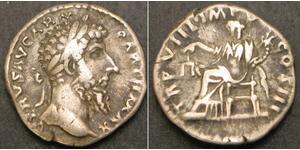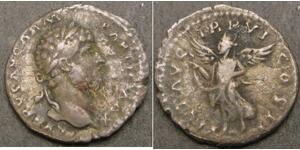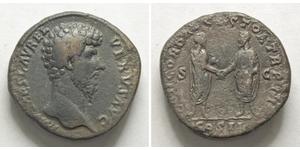
| Lucius Verus (130-169) | Link to Wikipedia |
Lucius Verus (130–169) AD: History and Coinage
Lucius Aurelius Verus, born Lucius Ceionius Commodus, stands as a pivotal figure in Roman history, marking the era where imperial authority fundamentally shifted. Ascending to the throne alongside his adoptive brother Marcus Aurelius in 161 AD following the death of Antoninus Pius, he became part of Rome's first official diarchy (dual-rule). This period is often viewed by historians as a necessary adaptation: sharing power allowed one emperor to manage Europe while the other commanded campaigns elsewhere. Unlike later periods where emperors ruled with their sons or generals behind them, this partnership was unique and set a precedent that defined imperial succession for centuries.
The Numismatic Legacy
- Ruling Entities: As co-emperor of the Roman Empire. He appears on Imperial coinage from Rome's capital mint in Constantinople or other major eastern cities where he governed provinces as part of a shared administration.
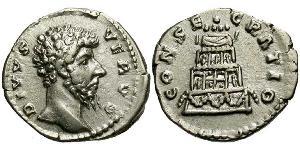
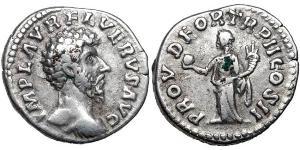
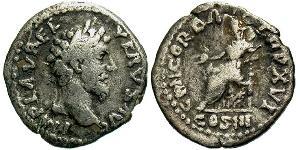
- Lifetime vs Posthumous Issues: The vast majority of surviving silver coins attributed to him were struck between 161 and his death in 169. He was deified immediately upon death; thus, any portraits showing the iconography of Divus Verus (Deified Lucius) are posthumous issues created shortly after his passing.
Coinage Circumstances:
Versatile and practical coin production during this time often combined his portrait with that of Marcus Aurelius, sometimes labeled as Numeri Imperii Caesares II. Collectors may also find portraits where Verus appears alone in the early years of their shared reign. The artistic evolution on these coins is particularly telling; unlike the mature sternness found in coinage later emperors like Diocletian, Lucius's coin imagery typically retains a slightly younger appearance throughout his brief life.
Collecting Appeal and Value
- Rarity: Because of the short duration of his reign (only seven years), there is simply less silver struck for Lucius than for Marcus Aurelius. For collectors specializing in Roman Imperial coins, a comprehensive run of Verus's coinage can be challenging to assemble compared to more popular emperors like Trajan or Hadrian.
- Narrative Connection: These pieces serve as physical tokens of the "Second Empire" partnership. Owning these connects you to one of Rome's first major political experiments and his campaigns against Parthia, often celebrated in poetry by Fronto.
In summary, a collection featuring Lucius Verus is not merely an accumulation of metal; it captures the moment when Roman governance was transformed. For serious collectors, these coins offer a tangible link to history's greatest partnership and its most ambitious military expansion into Persia.