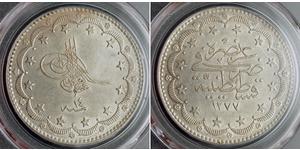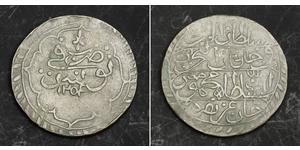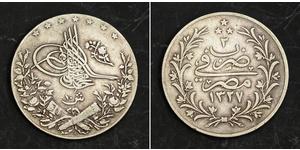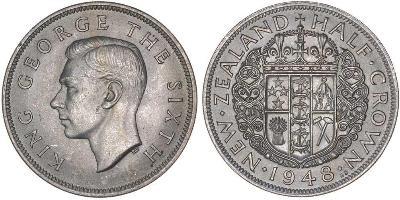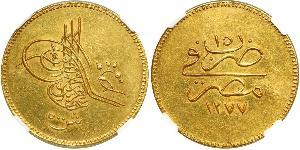
| Abdülaziz of the Ottoman Empire (1830 - 1876) | Link to Wikipedia |
Abdülaziz of the Ottoman Empire, Sultan of Constantinople: History and Coinage
Sultan Abdülaziz ruled at a pivotal juncture in history where tradition clashed with modernization during his reign over the Ottoman Empire from 1861 until his deposition in 1876. A son of Mahmud II, he ascended after his brother Abdulmejid I and stood between the era of imperial reform and economic collapse. To understand a coin depicting this sovereign requires more than a glance at its date; it demands an appreciation for Abdülaziz as a complex figure who sought to modernize the empire while facing mounting international pressure.
The Connection Between Sultanate, Reform, and Coinage
Abdulaziz is historically significant not only for his diplomatic tours of Western Europe but also for implementing the Tanzimat reforms that reshaped administration. While portraits are rare in Ottoman coinage compared to earlier eras or later republican issues, coins minted during his reign carry a specific historical weight regarding monetary policy and imperial prestige.
- Era Transition: The late 19th century was when the Empire began standardizing its currency systems through international unions. Coins from Abdülaziz's lifetime represent this transition to more structured, though often failing, economic standards.
- Railways and Economy: His administration focused heavily on infrastructure like railroads to stabilize finances. These public works funded by foreign capital left a legacy in the state of the economy at his coinage minting; collectors can view these issues as physical representations of a nation trying to reassert fiscal credibility through European trade.
- Political Context: As political factions formed and opposition grew toward 1876, coins became tools for projecting stability that was not always present in reality. Understanding this helps contextualize the condition and rarity levels found within specialized numismatic catalogs today.
Premium Value for Collectors
The appeal of these specimens lies in their connection to a dramatic historical narrative. For collectors, coins from Abdülaziz are prized because they document his final years as Sultan, specifically the economic default and diplomatic isolation known as the Great Eastern Crisis.
Rarely does one encounter high-quality examples of this period's monetary issues that survived beyond 1876 when he was forced to abdicate. For collectors focused on completeness, these specimens offer insight into how an empire transitioned from a traditional sultanate model toward constitutional pressures in the Balkans and Europe.
The artistic quality also warrants attention; as his reign modernized Ottoman law and public education with Western influence, numismatic designs reflected this shift. The rarity of coins featuring specific mint marks or date variations associated with his later years makes them a fascinating study for those exploring the material culture of 19th-century diplomacy.
In conclusion, when adding these pieces to your collection, consider not just their aesthetic value, but how they mark the final chapter of imperial modernization efforts before Abdülaziz’s tragic end. They serve as enduring records of a time when an empire was rapidly changing under the weight of external expectations and internal economic instability.