| Frederick I, Grand Duke of Baden (1826 - 1907) | Link to Wikipedia |
Frederick I, Grand Duke of Baden (1826–1907): History and Coinage
A Liberal Sovereign in Central Europe
Frederick I was a monarch who navigated the Kingdom of Baden through one of the most transformative eras in modern European history. Born into royalty but rising to prominence through regency before his brother's death, Frederick solidified his rule as Grand Duke from 1856 until passing away at Mainau in 1907. Unlike many contemporaries who favored absolute power, he championed constitutional monarchy and civil marriage rights.
This era defined Central European identity before and after unification. For historians, Frederick represents a bridge between dynastic rule and parliamentary evolution. His presence was felt during the proclamation of the German Empire in Versailles in 1871, where he stood beside Emperor Wilhelm I as one of his few sovereign kin from southern Germany.
Frederick’s political acumen extended beyond borders; he famously facilitated Theodor Herzl's audience with Emperor Wilhelm II regarding Jewish statehood in Palestine. Such diplomatic maneuvering made Baden relevant not just locally but within the broader German states context, positioning him as a unique figure who influenced both domestic law and international Zionism.
Currency of a Constitutional Era
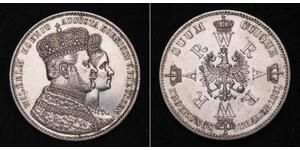
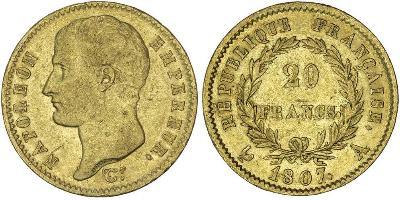
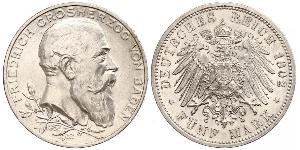
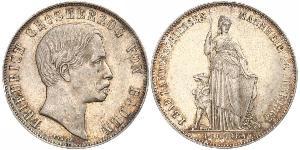
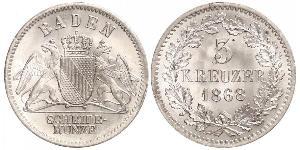
In numismatics, coins serve as miniature historical records of their issuing authority. During Frederick I's reign, currency issuance in Baden reflected the transition from local autonomy to integration with the North German Confederation and later Imperial Germany. The portrait on these pieces represented more than a face; it was a guarantee of value backed by sovereign power.
The specific imagery chosen for his silver thalers or copper pfennigs communicated statehood and loyalty within a unified imperial context following 1871. Following the conflicts with France, Baden coins often incorporated imperial symbols alongside traditional grand ducal crests due to Frederick's status as a son-in-law of King Wilhelm I.
The minting standards from this period were distinct; silver content and hand-engraved dies differ significantly from modern electroplated tokens. Collectors analyze these physical attributes to date specimens and understand the economic shifts during his long reign, which saw Baden move toward direct election rights in parliament before 1907.
Tangible History for the Collector
Frederick's coinage attracts enthusiasts seeking tangible connections to a time when personal rule defined economics. These objects often feature high-quality artistic engravings typical of German mint standards in the late nineteenth century, showcasing detailed iconography and typography that modern production rarely replicates.
Rarity drives their appeal significantly; lower mintage issues from his early regency or specific commemorative strikes are highly prized for numismatic rarity. Beyond simple circulation currency, finding a coin depicting Frederick allows an owner to hold in the hand the history of unification and constitutional change within Germany.
An Invitation to Explore
Possession offers a unique perspective on European statecraft during the Victorian industrial age. For those building specialized collections on German states monarchs or Imperial transition periods, these items offer educational value that transcends mere market price. Studying them provides insight into how currency circulation supported trade between Baden and other major powers like Prussia.