| Frederick Francis II, Grand Duke of Mecklenburg-Schwerin | Link to Wikipedia |
Frederick Francis II (1823 – 1883): History and Coinage
Frederick Francis II, Grand Duke of Mecklenburg-Schwerin, stands as a testament to the complex political landscape of nineteenth-century Europe. Born into aristocracy yet defined by his military prowess, he ruled from March 1842 until his death in April 1883. His life spans an era where independent German states were evolving toward unification under Prussian influence. As both a regional ruler and an active participant in national conflicts involving Denmark, Austria, France, and Russia, Francis II embodied the bridge between local sovereignty and imperial ambition.
This duality of military leadership on the front lines versus administrative responsibility in Schwerin is central to understanding why state coinage was commissioned during his reign. He served as a general for Prussia alongside his dynastic duties to Mecklenburg-Schwerin, commanding troops at Toul and elsewhere while simultaneously representing German interests abroad.
The Connection to Currency
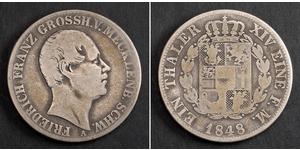
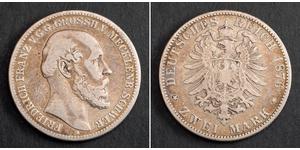
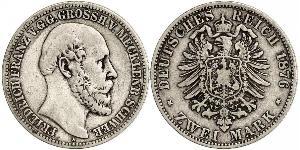
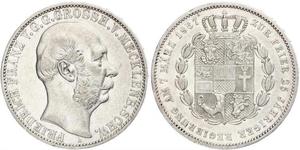
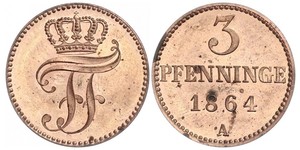
Coinage serves as the primary link between this sovereign and his subjects during his public tenure. During his lifetime, authorities in Schwerin minted silver denominations depicting his portrait or name as Grand Duke. These issues typically predated the 1873 German monetary reform which standardized currency across most of Germany.
The design evolution on these pieces mirrors political realignments that occurred during the unification process. For instance, earlier coinage emphasized regional independence with local heraldry alongside his portrait, while later mints might incorporate imperial symbols or Prussian motifs following conflicts in 1870 where he held command roles under Imperial Germany.
The minting authority shifted from purely local to imperial contexts as the grand duchy integrated into larger monetary systems. Posthumous releases or military commemorative pieces sometimes feature later dates but focus on his service record rather than daily circulation as a living ruler of an independent state entity.
The Appeal for Collectors
Coin collectors often pursue these artifacts not merely as financial assets, but as tangible history books of the German Confederation and early Empire. The scarcity of local silver issues makes them valuable educational tools regarding monetary reform before nationalization occurred in 1873.
Collectors are attracted to pieces featuring this individual because they connect directly to major European wars fought on multiple fronts. Furthermore, his diverse family connections with Russian Tsars and German Emperors make coins from his line interesting for diplomatic historical study as well as regional numismatics.
In summary, examining these issues allows enthusiasts to hold the physical weight of history where metallurgy preserved the image of a ruler who stood on the borderlands between kingdoms. Exploring them brings clarity regarding how small states navigated imperial unification through their own economic identities before disappearing into larger currency systems.