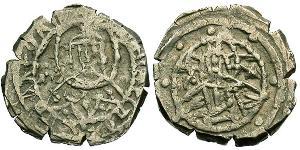
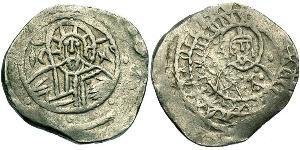
| John VIII Palaiologos (1392-1448) | Link to Wikipedia |
John VIII Palaiologos (1392–1448): History and Coinage
The Guardian of a Dying Empire
Emperor John VIII Palaiologos was the penultimate Roman ruler to govern from Constantinople, reigning at a time when the Byzantine state faced its most existential threats. Born in 1392 and ruling until his natural death in 1448, he stood as a bridge between his father Manuel II and his brother Constantine XI. His historical significance lies primarily in his relentless diplomatic efforts to secure Western European aid against Ottoman expansion while attempting to reunite the Eastern Orthodox and Roman Catholic churches.
Beyond mere chronology, John VIII represents a final generation of imperial sovereignty where Constantinople survived decades under siege. During this turbulent era, maintaining economic continuity was vital for survival. The coinage struck during his reign served as both a medium of exchange for allies like Venice and a declaration of imperial legitimacy to foreign powers he visited in Italy.
The Emperor on Metal
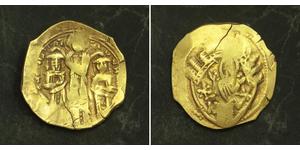
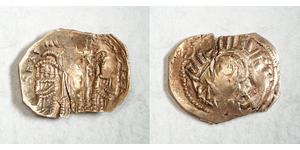
Metallic currency issues from John VIII’s court offer collectors tangible proof of the empire's political maneuvering. While earlier Byzantine coinage featured elaborate portraits, late period denarii and hyperpyra often utilized more standardized designs to manage costs as resources dwindled.
- Lifetime Issues: Coins minted during his rule were intended for international trade with Italian city-states such as Venice. These denominations facilitated payments for military contracts that kept the Ottoman advance at bay temporarily.
- Ratification of Union: His journeys to Florence in 1439 were historic diplomatic events. While physical medals may exist from these gatherings, coinage continued locally to fund his campaigns after he returned empty-handed regarding the alliance.
The scarcity of surviving specimens makes numismatics an essential tool for understanding this period. As production volumes decreased due to war and blockades, finding a specimen from John VIII provides direct evidence that imperial authority persisted until 1453. These pieces are often sought after not for their metal content but as historical markers.
The Collector's Perspective
Educational value is the primary driver behind collecting these artifacts. Enthusiasts seeking John VIII coins gain insight into a specific window of late medieval finance where gold solidus types gave way to different standards before 1453.
- Rarity: Very few issues were released for the general population due to wartime disruption, making authenticated pieces historically significant rather than common.
Holding a John VIII coin is akin holding a fragment of his diplomatic campaigns. It connects modern hobbyists with a man who walked Italian courts and faced Ottoman walls simultaneously. For those exploring medieval history, these artifacts bridge the gap between political biography and economic reality in one small object.