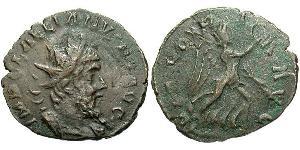
| Ulpius Cornelius Laelianus (?-269) | Link to Wikipedia |
Laelianus (? – AD 269): History and Coinage
The Rise of Laelianus
In the shadowy corridors of late third-century history, Ulpius Cornelius Laelianus occupies a significant place as one of the many contenders for imperial power within the independent Gallic Empire. While his personal origins remain somewhat veiled in mystery to modern scholars, his brief ascent highlights the volatile political climate where Roman authority fractured under pressure from external invasions and internal dissent. Rising during 269 AD, Laelianus emerged at a critical moment when Postumus was struggling to maintain independence against Rome while facing constant Germanic threats on the northern frontier.
Laelianus declared himself emperor after successfully repelling a major invasion of legions near Moguntiacum, or modern Mainz. His control was anchored by two powerful military units stationed in the city and surrounding fortresses. Despite commanding such formidable forces against his rival Postumus, his rebellion proved short-lived. He reigned for only four months before being executed following his defeat during a siege of the capital in June 269 AD.
The Numismatic Legacy
Beyond military history, Laelianus is best remembered by numismatists through rare gold aurei minted specifically to legitimize his rule. These coins served as propaganda tools intended to rally support from the Spanish provinces within Gaul and signal a break or connection with Rome’s central power.
The most striking feature of these issues is their unique artwork depicting Hispania, often represented by a reclining female figure accompanied by a rabbit. This imagery was not merely decorative; it suggested specific cultural alliances among local forces that opposed Postumus’ direct rule without immediate Roman intervention. These coins were struck almost exclusively in Mainz and ceased once his uprising collapsed.
Value for Collectors
Why Study Laelianus Coins?
- Rarity: The short duration of his reign means very few coins exist outside standard collections found in private holdings or major museum archives.
- Historical Context: Each piece provides a snapshot of the Gallic Empire's political instability and its reliance on local identity markers rather than traditional Roman imperial iconography.
For enthusiasts, Laelianus coins represent more than metal value; they are tangible artifacts of military rebellion that reshaped Western Europe in AD 269. By examining the artistry on these aurei, collectors gain insight into how usurpers utilized minting operations to declare sovereignty during a chaotic era.
In essence, Laelianus stands as a fascinating intersection of Roman history and numismatics. His brief rule serves as a case study for understanding why certain coins are hoarded while others are melted down quickly in times of civil strife. Exploring his issues allows scholars to appreciate the intricate relationship between military leadership, artistic expression, and economic stability during one of Rome's most turbulent centuries.