| Commodus (161-192) | Link to Wikipedia |
Commodus 31 August 161 – 31 December 192: History and Coinage
Lucius Aelius Aurelius Commodus, born on the first of August in Lanuvium near Rome, stands as a pivotal figure bridging the era of imperial stability and chaotic decline following his assassination. As the son of Marcus Aurelius, he was the first Roman emperor to ascend directly from birth into power while still living under his father’s reign. While often remembered for erratic behavior that signaled the end of the Pax Romana, recent numismatic evidence suggests a complex transition period where public sentiment remained divided between senatorial disdain and popular military support.
Relationship to Coinage
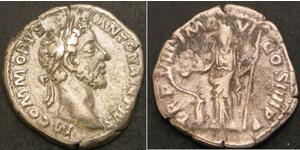
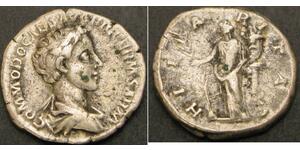
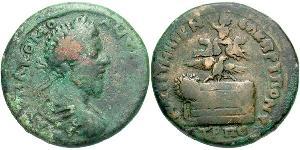
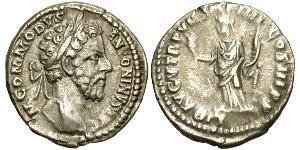
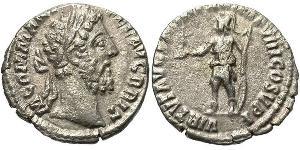
Coinage issued during Commodus's sole reign provides tangible proof of economic shifts within the empire. During his rule starting in 180 A.D., imperial mints systematically altered metallic composition visible only through close inspection by collectors today. He devalued the denarius, reducing its silver purity from roughly eighty percent to sixty-six over a few years until it was debased further for handouts and lavish games.
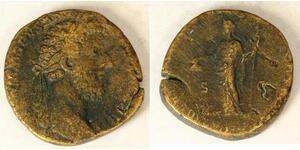
This decline is not merely historical trivia but an economic barometer seen on every piece struck after 186 A.D.. Additionally, Commodus popularized non-traditional imagery. While earlier emperors emphasized military virtue through depictions in armor or toga picta of civil service virtues, he increasingly featured theatrical gladiatorial gear during this period to align with his public performances. This shift is visible on bronze coins circulated among Roman soldiers who followed him back from the Danubian front and returned to Rome for triumph celebrations before negotiating a peace treaty.
Why Collectors Value These Coins
Specimens attributed to Commodus are sought for their role in documenting final days of imperial peace, offering insight into how an emperor's reputation changed through visual propaganda rather than battlefield deeds. Early examples struck with full silver content remain relatively accessible compared to later denarii which suffer heavy wear or corrosion due to economic necessity making them rare finds today.
Collectors also appreciate these issues for their historical context regarding the end of the Nerva-Antonine dynasty, specifically coins produced just prior to his assassination in 192 A.D.. These pieces serve as primary sources for understanding how currency became a political weapon and why it ultimately failed when inflation eroded public trust. Exploring this series allows enthusiasts to trace tangible economic erosion that accompanied Commodus's controversial rule without relying solely on ancient texts like Cassius Dio which often painted him with heavy criticism.
By examining these specimens, historians can distinguish between coins minted by loyalists or favorites such as Cleander who maintained the cult of personality against a backdrop of conspiracies. For any collection focusing on Roman history, this dynasty offers essential insight into how coin quality mirrored political stability before Rome descended into civil conflict after his death.