| Karl Marx | Link to Wikipedia |
Karl Marx (1818–1883): History and Coinage
The Intellectual Architect of Modern Sociology
In the annals of 19th-century intellectual history, Karl Marx stands as a monumental figure who fundamentally reshaped how humanity understands economic structure. Born in Trier to a Jewish family that had converted to Christianity within Prussia's Kingdom, Marx developed his theories on historical materialism while living under political surveillance in continental Europe.
Educated at the University of Berlin and later London following exile from the revolutions of 1848, he dedicated much of his life to critiquing capitalism. His co-authorship with Friedrich Engels produced The Communist Manifesto (1848), which articulated a global theory on class struggle between the bourgeoisie and proletariat. Marx spent decades analyzing political economy in works like Das Kapital, theorizing that internal contradictions within capitalism would inevitably lead to its self-destruction.
The Numismatic Connection
Karl Marx was never depicted during his lifetime on sovereign circulation coinage; major powers issued currency bearing the likenesses of heads of state rather than political theorists. However, after his death in 1883, his image and theories became central to the ideological foundations of several governments.
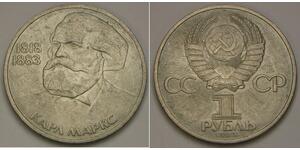
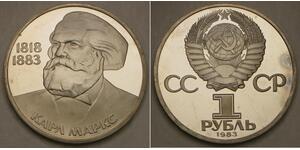
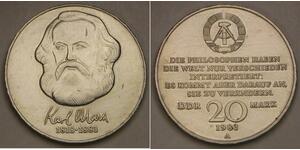
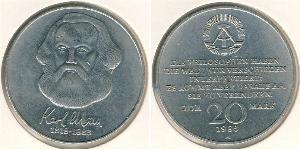
The portrait or bust associated with Marxist theory began appearing primarily on banknotes issued by East Germany (GDR) and other socialist states during the mid-20th century. While these are often noted as paper currency items in general history, they exist alongside specific commemorative metal pieces minted for historical anniversaries of revolutions such as 1848 or the founding dates of communist parties.
The circumstances surrounding this imagery reflect a unique period in monetary history where state ideology dictated design. Collectors encounter these issues primarily through specialized auctions focusing on Eastern European numismatics, though modern commemorative mints also released limited metal strikes for Marx's 200th anniversary to mark his centennial year.
Rarity and Historical Curiosity
Niche Value:
- Historical Context: These pieces offer a tangible connection to the era of state ideology, making them prized items for political historians rather than just traditional coin collectors.
- Rarity and Condition: Many early posthumous issues were produced in limited quantities or high artistic value as propaganda material. Finding well-preserved examples from socialist regimes can be significant due to their scarcity compared to common Western circulation coins.
Additionally, the artwork utilized on these pieces represents a specific historical style of portraiture commissioned for state purposes during the Cold War era. For collectors seeking items that bridge economics and political history, Marx-related issues provide an educational opportunity to understand how currency serves as more than just medium-of-exchange; it is often used by states to broadcast their vision.