| Christian VII of Denmark (1749 - 1808) | Link to Wikipedia |
Christian VII of Denmark (1749–1808): History and Coinage
Crown Prince Christian ascended to the throne at a young age following his father’s death in 1766, but his journey was fraught with personal adversity marked by illness and family strife. Unlike typical sovereigns who solidified power through military campaigns or administrative prowess, Christian VII navigated court life surrounded by regents such as Johann Friedrich Struensee during the reform era of the early 1770s.
His reign was characterized not merely by nominal rule but by significant internal instability. While he bore the crown until his passing in 1808, much of his actual authority lay with physicians, tutors, and eventually other family members acting as Prince Regent. Despite these limitations on governance capacity, official ceremonies continued to uphold monarchical dignity. Christian VII stands as a historical figure whose personal turmoil contrasts sharply with the rigid continuity required by state institutions.
Presence on Currency
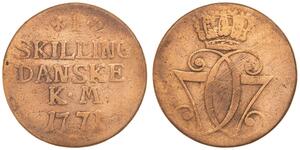
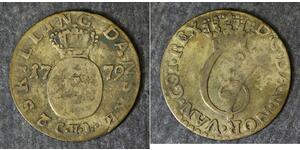
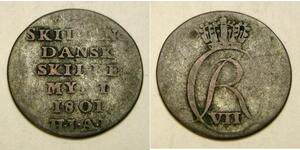
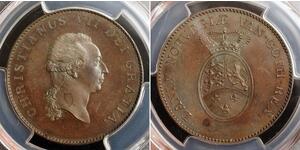
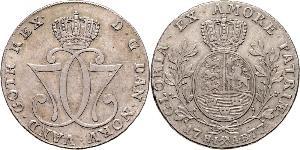
Danish state mints produced copper coins in denominations like the rigsdaler throughout his tenure from 1766 until 1808. These issues were authorized under absolute monarchy laws, meaning that even if political power shifted between Struensee and Queen Dowager Juliane Marie, legal authority remained tied to Christian VII’s name and likeness.
The coins served as a declaration of continuity for the Crown despite domestic discord. They feature allegorical figures representing commerce or statehood alongside his portrait, symbolizing that the monarchy stood above personal tragedy. Collectors examining these issues observe how currency standards persisted even when the head of household experienced frequent seizures and required constant medical intervention during public engagements.
Numerismic Appeal
Beyond raw rarity or condition factors in silver, Christian VII pieces offer unique historical value:
- Historical Context: Owning these coins connects the holder directly to the Enlightenment reforms and political shifts that reshaped Scandinavian governance.
- Rarity Factor: Later issues, minted under regency influence or shortly before his death, can be scarce compared to earlier Frederick V types found in circulation from other reigns.
- Aesthetic Interest: Mint designs of the era reflect Baroque and Neoclassical influences typical of European court art during this transitional period between traditionalism and modernity. Exploring these artifacts offers insight into how absolute monarchies maintained authority through imagery even when actual power dynamics were fluid.
Ultimately, finding these coins requires looking beyond market values to appreciate the resilience required by the mint masters of Copenhagen who produced currency during one of Denmark’s most complicated eras. These objects remain a tangible bridge between medical history and national identity for dedicated collectors today.