| William, Duke of Brunswick | 链接到维基百科 |
William, Duke of Brunswick (1806–1884) History and Coinage
Historical Significance
William, Duke of Brunswick (German: Wilhelm August Ludwig Maximilian Friedrich), stands as a pivotal figure in the fragmented German states preceding unification. As a ruling member of the House of Welf, he governed the Duchy of Brunswick from 1830 until his death in 1884. His life was marked by significant European political turbulence during this transformative era. The second son of Frederick William, Duke of Brunswick-Lüneburg, he entered early public service as a Prussian major before assuming leadership duties following the rebellion against his brother Charles in 1830.
William spent much of his later life at Oleśnica Castle within present-day southwestern Poland. His personal history intertwined deeply with high European royalty; notably, after his father died in 1815, he was placed under the guardianship of King George IV of the United Kingdom, highlighting a close familial connection to the British aristocracy that would influence dynastic relations throughout the century.
The Numismatic Connection
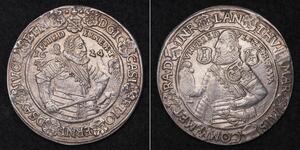
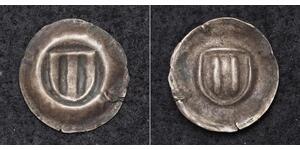
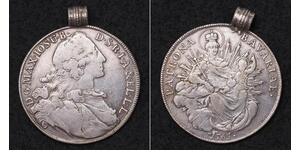
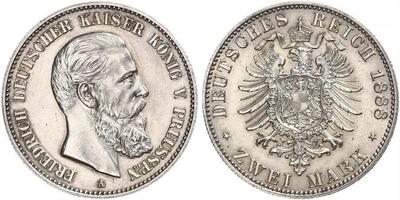
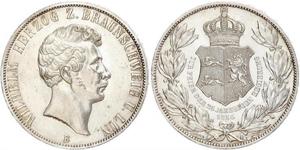
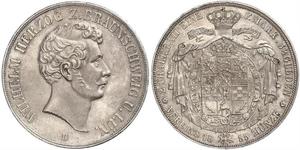
During the nineteenth century, coinage served as both currency and political declaration for smaller German states like Brunswick. Official issue typically displayed the reigning duke's portrait alongside heraldic symbols of the House of Welf to validate legitimate rule after rebellions deposed his brother Charles in 1830. While William joined the Prussian-led North German Confederation in 1866, adopting new economic standards and a strained relationship regarding Hanoverian succession disputes with Ernest Augustus.
Coinage from this period reflects the shifting landscape of sovereignty within central Europe before standardization under later empires took hold. Collectors should note that while he reigned personally for decades, commemorative medals bearing his likeness circulated widely after his passing during the constitutional crisis following 1884 and beyond.
Why Collectors Value These Coins
Nuismatists prize specimens depicting William not merely for monetary rarity, but because they encapsulate a specific era of German history marked by the dissolution of independent duchies into larger confederations between 1867 and the early twentieth century. The artistry found on these pieces offers insight into mid-nineteenth-century minting techniques utilized in central Europe before modernization took hold globally.
Furthermore, the dynastic link to British royalty provides a unique bridge for collectors with interests across Atlantic and continental numismatic fields who seek rare examples connecting German state money to United Kingdom history through the King George IV connection. Understanding these historical contexts enriches the appreciation of each piece found in any specialized collection focusing on House of Welf currencies or Royal family connections involving 1806 births, making them highly desirable pieces that preserve a vanished era of sovereign independence within modern financial systems.