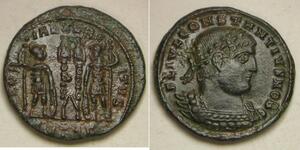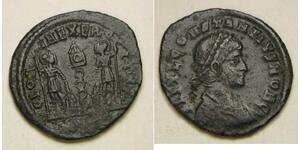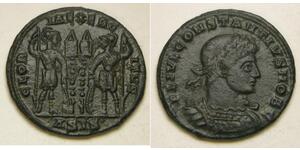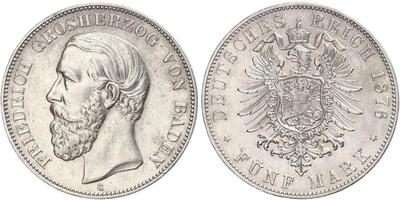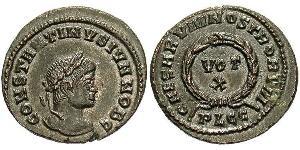
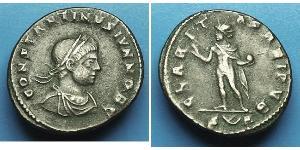
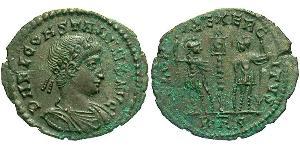
| Constantius II (317 - 361) | Link to Wikipedia |
Constantius II (317–361): History and Coinage
Flavius Julius Constantius stands as a pivotal figure in the late Roman Empire, reigning from 337 until his death in 361 CE. As the son of Emperor Constantine the Great, he solidified imperial authority during turbulent times marked by foreign invasions and internal strife between brothers and usurpers like Magnentius. His tenure defined a critical era where Rome struggled to defend its eastern borders against Sasanian Persia while managing civil unrest in the west. For numismatists, his life represents a bridge between classical antiquity and early medieval transitions, offering tangible links to a dynasty that fundamentally reshaped European history.
The Emperor on Coinage
Currency bearing Constantius II's visage was struck across vast regions of the known world during both his lifetime following campaigns led by rival usurpers who sought legitimacy in Rome's name but feared the true heir's authority. Initially styled as Caesar, later Augustus, imperial workshops produced aurei and denarii depicting a mature ruler whose likeness evolved from youthful idealism to military determination under pressure of war against Germanic tribes across the Danube frontier. While Constantius often preferred administrative governance over physical presence on distant fronts, coinage served as his mobile government, projecting power where soldiers could not physically stand guard every mile along the Rhine and Euphrates frontiers during times of political fragmentation caused by brothers fighting or rival generals usurping titles in defiance of established succession laws.
The Numismatic Appeal
Collectors cherish these specimens because they encapsulate a specific moment in time known as the Constantinian dynasty's complex governance structure, often illustrating Arian religious shifts visible through iconographic changes later on their heads. These artifacts are particularly prized for preserving historical narratives of late antique military history and imperial administration strategies that relied heavily upon visual propaganda across the Mediterranean world without modern communication means.
The value extends beyond mere metal content or gold weight; these pieces offer insight into how emperors utilized currency to enforce ideology during periods of intense theological debate within the empire. Scholars analyze reverses depicting military triumphs against Persia as evidence of specific campaign successes that reinforced Constantius's image among border provinces.
- Rarity: Certain issues struck during civil conflict against usurpers represent transitional periods where coinage was irregularly minted to assert loyalty over contested provinces like Syria or Thrace. This makes high-grade examples of war time production highly sought after by specialists studying the collapse and recovery phases of late antiquity.
- Ritual Significance: The artistic quality of portraits reflects a stylistic shift away from classical idealism toward more realistic depictions, signaling a broader cultural transition that began with this emperor's reign in Mopsuestia before his final illness and death.