| Gaius Pescennius Niger (135-194) | Link to Wikipedia |
Gaius Pescennius Niger (c. 135– c. 194): History and Coinage
Gaius Pescennius Niger stands as a defining figure of the Roman civil wars that erupted following the assassination of Pertinax in 193 AD. Born into an old Italian equestrian family, he rose to prominence during a turbulent era marked by rapid imperial succession and political instability within Rome itself. As legate of Syria under Emperor Commodus, Niger was appointed governor over one of the wealthiest provinces known for its resources. However, his loyalty shifted after news reached him that Didius Julianus had purchased the throne in an auction.
Drawing on local support from Asia Minor and Egypt, he declared himself emperor by April 193 AD, taking the additional cognomen Justus to emphasize virtue over martial prowess during a period of civil disorder. His reign lasted merely ten months before facing decisive defeat at the hands of Septimius Severus in May 194. Despite his short tenure, Niger remains historically significant as one of three major contenders for power that challenged the central authority after Commodus, representing how regional governors could leverage imperial administration to claim supreme rule.
The Numismatic Legacy
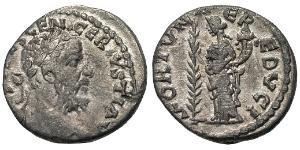
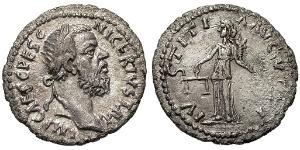
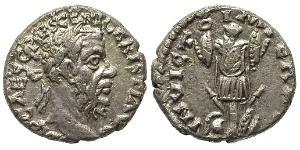
In this period, coinage served a dual purpose: paying troops loyal in person and projecting an image of legitimate sovereignty. Coins were struck bearing Niger's likeness shortly after his proclamation by the eastern legions around 193 AD. The portraits often depicted him with distinctive features that modern scholars associate with contemporary descriptions of pale skin contrasted against dark necks or complexion, fitting the moniker derived from Latin for black.
The legends on these pieces typically included titles such as Augustus and sometimes added honorific terms distinguishing his regime in specific regions like Syria. Since minting occurred while empires fractured during war, many examples lack standard central Roman stamps found on later issues. While some examples are believed to be posthumous strikes from loyalist strongholds before they were recalled after his capture at Antioch and subsequent execution near Byzantium, most date strictly to the 193-to-194 window.
The Appeal for Collectors
- Rarity and Historical Context:
- Pieces depicting Niger are scarce because they were produced during a chaotic conflict when resources were diverted to war rather than minting. A single Aureus or Denarius connects the collector directly to a decisive moment in Roman history where provincial governors competed against each other for legitimacy.
The artistry of these pieces is notable, though often hurried compared to imperial standards from Rome itself, reflecting the urgency of raising funds during an existential crisis. Collectors also value their connection to ancient mints located near modern cities in Turkey or Syria where excavation has recovered large hoards.
- Scholarly Importance: The study of these issues offers a tangible link to an often overlooked ruler whose coinage outlived its creator. For those examining currency from this transition period, Niger provides physical evidence regarding the geographical reach of his influence in Asia Minor compared to Septimius Severus.
The analysis of these pieces concludes that they represent not just economic instruments but political statements about loyalty and authority during the Year of the Five Emperors. For those examining ancient currency today, this brief usurper remains a pivotal subject connecting numismatics with broader understanding of imperial fragmentation in the second century AD.