| Saparmurat Niyazov | Link to Wikipedia |
Saparmurat Niyazov (1940–2006): History and Coinage
To the history enthusiast, Saparmurat Niyazov represents one of the most distinct eras in Central Asian state-building. Leading Turkmenistan from its declaration of independence until his death in 2006, he oversaw a profound transformation where political autonomy merged with intense cultural assertion. His tenure defined the early republic's relationship with global trade and local identity.
Beyond politics, Niyazov utilized state symbols to cement national unity through specific economic policies that shaped public life significantly for over fifteen years of his rule. This period laid foundational groundwork for Turkmenistan’s modern economy, focusing on resources like oil and gas which would subsequently fund the nation's numismatic programs.
The Numismatic Connection
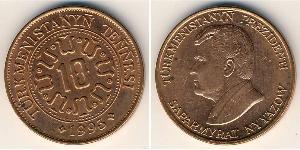
Numerous political entities in Central Asia issued currency depicting leaders to solidify national sovereignty immediately following independence. For Niyazov specifically, his portrait appeared prominently on Turkmenistan banknotes rather than standard circulation coinage during this era of transition.
In the context of a collector's portfolio, these items are categorized as paper money issues that carry historical weight equivalent to coins in many other regions. While modern sovereign nations often place their heads of state exclusively on commemorative medals or bullion rounds, his image remained central to monetary output during the first decade after 1992.
The portrait was used not merely for identification but as a vehicle for ideological promotion through currency design. This approach mirrored historical trends in closed economies where money circulated alongside political messaging aimed at creating cohesion among citizens and ensuring state control over financial identity.
Collections of Historical Note
- Historical Context: Collectors value these items because they serve as physical archives of a unique cultural experiment in post-Soviet history. The imagery often references specific reforms, such as new holidays or calendar adjustments mentioned during his presidency.
- Rarity and Scarcity: Early independent currency issues are increasingly scarce due to low circulation volumes typical for emerging markets at the time.
- Educational Value: Examining these pieces offers insight into how new nations utilize financial instruments to brand their independence, distinct from Soviet-era predecessors or modern democratic neighbors.
For those seeking a deeper connection between history and tangible objects of value, this series provides a direct narrative regarding the birth of modern Turkmenistan. Exploring these artifacts encourages an appreciation for how economic systems evolve alongside political leadership in young nations navigating their path to global integration.