| Guangxu Emperor | Link to Wikipedia |
Guangxu Emperor 1871–1908: History and Coinage
The Guangxu Emperor, born Zaitian in 1871 and ruling until his death in 1908, stands as a pivotal figure in late imperial Chinese history. Ascending to the throne at age three after the death of Tongzhi without an heir, he was groomed under heavy supervision from Empress Dowager Cixi. His reign is defined by the Hundred Days' Reform of 1898, an ambitious but short-lived campaign led by reformists like Kang Youwei and Liang Qichao to modernize China's political systems amidst defeats in wars with France and Japan. Ultimately, his radical efforts failed due to conservative court politics orchestrated by Cixi, leading to deposition under house arrest until he passed away shortly after her death in a mysterious illness thought to be arsenic poisoning at age 37.
Relationship to Coinage
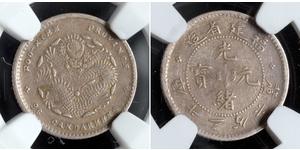
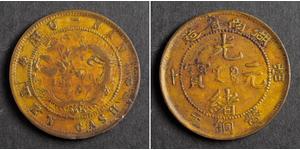
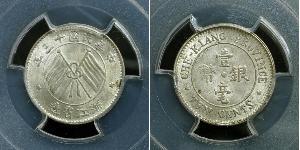
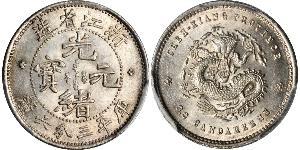
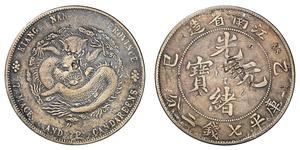
While Qing currency from this era did not typically feature Western-style effigies of the sovereign like modern banknotes or later imperial issues, his name appears prominently on standard copper cash known as Guangxu Tongbao and Yuanfeng Tongbao circulated during a turbulent transition period. Collectors examine these pieces to understand how authority was maintained through script rather than portrait imagery in traditional Chinese mints prior to late 20th-century reforms. While portraits were not common on circulation coins of this specific dynasty, modern commemorative issues issued by the PRC government often depict him posthumously as part of historical educational series linking national identity with reform history. Additionally, contemporary medals bear his title or likeness during centennial celebrations related to restoration efforts in China's economy after 1908.
Why Collectors Value These Coins
Pieces from this era are prized not merely for scarcity but as tangible links to a critical period of transition before the fall of imperial rule and establishment of the Republic. The condition often reflects the instability of his final years, making pristine examples rare due to war usage or heavy tax demands affecting mint outputs. Numismatists find value in identifying specific mint marks that reveal production volume during economic strain before 1908 ended Qing rule. For specialized collections focusing on late Qing numismatic history or modernization themes, these coins serve as essential artifacts demonstrating how fiscal policy intertwined with political ambition and collapse.
Exploring this medium offers insight into a forgotten era of cultural preservation where monetary systems reflected the weight of governance in a dying empire seeking to secure wealth while avoiding arrogance for its citizens. Historical context is paramount when viewing Guangxu-era currency, as it marks the intersection of Confucian traditions and emerging industrial demands before sovereignty eroded completely.