| Aelia Eudoxia (?-404) | Link to Wikipedia |
Aelia Eudoxia (died 404): History and Coinage
In the intricate political tapestry of late antiquity, Aelia Eudoxia stands as a pivotal figure who bridged traditional Roman governance with emerging ecclesiastical complexities. Born to Flavius Bauto, a Frankish general serving in the Western army, she entered Constantinople around the year 391 following her father's passing and rise into prominence within high society courts of the East. Her marriage to Emperor Arcadius was orchestrated by eunuch court officials seeking influence rather than romantic intent, yet it proved politically astute as she became Empress at a critical juncture for the Eastern Empire.
The significance of Eudoxia lies in her ability to assert independent authority following the fall of earlier powerful ministers like Rufinus and Eutropius. In January 400, the state officially bestowed upon her the title Augusta. This elevation allowed her to adopt imperial vestments previously reserved for male emperors, including the purple paludamentum. She subsequently acted alone in religious matters while presiding over processions of martyrs relics and dedicating churches such as Eudoxiané.
Relationship to Coinage
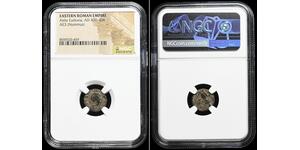
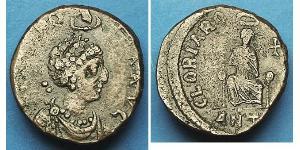
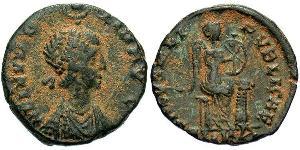
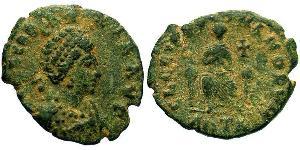
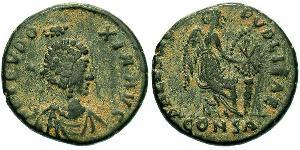
The Eastern Roman Empire issued coinage depicting Aelia Eudoxia, primarily beginning from her formal accession as Augusta on 9 January 400 until her death in October 404. The coins minted at Constantinople featured portraiture intended to reinforce dynastic stability and loyalty during a turbulent period marked by conflicts with generals like Gainas and theological disputes involving John Chrysostom.
Unlike earlier periods where empresses were merely ornamental, these portraits often depicted her in attire mimicking the male Augustus. This imagery signaled an active participation in statecraft rather than passive support for a spouse who remained absent from public religious ceremonies. The coinage serves as historical evidence of women assuming roles previously restricted to men during the late 4th century. While some contemporary writers were hostile, the physical objects themselves reflect her status and official rank within the administration.
Why Collectors Value These Coins
Numismatists prize examples featuring Eudoxia not necessarily for scarcity but for their profound narrative weight regarding a shifting civilization. For those collecting ancient history, these pieces offer tangible proof of female agency in governance before later medieval counterparts like Theodora appeared centuries afterward.
- Their historical importance connects directly to the transition from Classical Rome to Late Antiquity political structures.
- Pieces often circulate alongside contemporary imperial types that mark specific military campaigns or religious decrees associated with her patronage of martyrs and basilicas.
- Rarity is less a factor than the cultural shift; they represent one of the final major figures before Constantine's successors fully consolidated power in Constantinople.
Exploring this collection provides insight into how propaganda functioned to legitimize female rule, making these coins essential for anyone studying the interplay between church politics and imperial coinage. Their visual language remains a critical component of understanding late Roman society through material culture rather than just textual accounts alone.