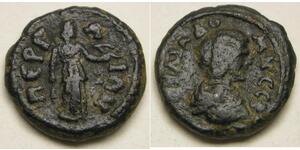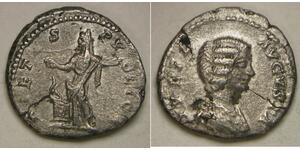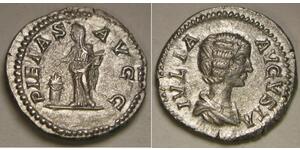
| Julia Avita Mamaea (180-235) | Link to Wikipedia |
Julia Avita Mamaea (c. 182–235): History and Coinage
Julia Avita Mamaea stands as a pivotal figure within the late Roman Empire, representing the transition of power through one of its most distinctive dynasties. As a Syrian noblewoman from Emesa, she played an instrumental role in securing the throne for her son, Alexander Severus.
Her political acumen allowed her to navigate turbulent years between 218 and 235 AD, guiding the empire following the assassination of Caracalla and during Elagabalus's short reign. Born into a powerful family connected to emperors Lucius Septimius Severus and Julia Domna, she was educated by Greek philosophers before ascending from private citizen to Augusta.
The Relationship Between Julia Mamaea and Roman Coinage
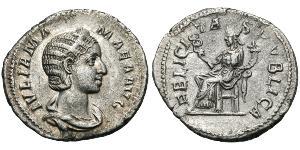
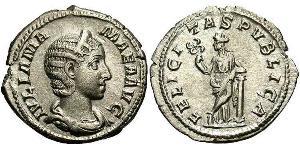
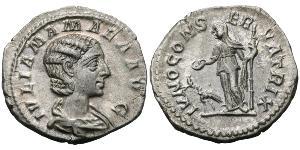
Roman coins served as propaganda tools designed to disseminate imperial authority across vast provinces. During Alexander Severus’s rule between 222 and 235 AD, the Imperial mint issued aurei, denarii, and Antoniniani featuring portraits of Julia Mamaea alongside her son's image.
- Mint Locations: These coins were struck primarily in Rome, along with other major imperial mints including Antioch, where the emperor had strong political ties to his Eastern origins.
Inscriptions and Titles:
Numerismatic records highlight her specific title as mother of the camp and senate. This phrasing was crucial for legitimacy during times when military loyalty fluctuated wildly between different generals. Most surviving imagery depicts her during Alexander’s reign while she actively advised him, ensuring the emperor appeared mature despite his youth.
Rationale for Collecting These Issues
Coin collectors appreciate Julia Mamaea issues for their rich historical context and distinct artistic style typical of the early Severan period. Finding a denarius from this era offers tangible evidence of how Rome viewed maternal authority in public life during the third century.
- Rarity: The specific years surrounding 235 AD are chaotic, making high-grade specimens rare due to rapid regime changes and subsequent military destruction.
Historical Significance:
Studying these coins helps historians understand the decline of senatorial authority in favor of army loyalty during the Crisis of the Third Century. By examining a coin bearing her image, an enthusiast holds a fragment of Rome’s political memory.
Narrative Importance
Julia Mamaea reminds collectors that women were not merely passive figures but active architects of empire stability in ancient history.