| Karl Friedrich Alexander (1823 - 1864) | Link to Wikipedia |
Karl of Württemberg (1823–1891): History and Coinage
A Liberal Sovereign in Turbulent Times
The reign of Karl of Württemberg marks a pivotal moment in the history of Central Europe. Ascending to the throne as King Charles I on June 25, 1864, he presided over the Kingdom during its integration into the newly formed German Empire under Prussian dominance following the Franco-Prussian War. Unlike his conservative father, Karl implemented significant liberal reforms, including press freedom and expanded suffrage in the late 1860s.
This era bridged traditional monarchical rule with modern nationalist movements across Germany. For history enthusiasts tracing the dissolution of independent kingdoms into larger national entities, this period provides a fascinating snapshot of political evolution at its most active state level. Born in Stuttgart to King William I, Karl faced a complex geopolitical landscape where Austria and Prussia vied for supremacy over German states.
The Numismatic Legacy
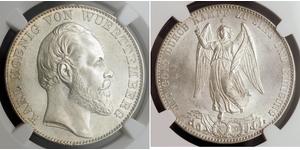
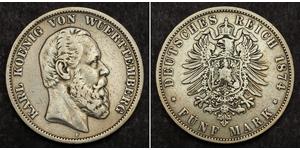
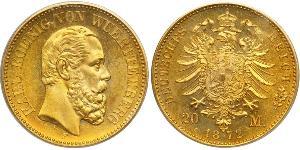
Coinage minted in Württemberg during Charles's rule reflects his specific status as a sovereign within the Empire. While Prussia dominated foreign policy, individual German states like Württemberg retained their own currency designs featuring royal effigies until imperial standardization took hold more rigorously later on.
The portrait of King Charles appears primarily in silver denominations minted between 1864 and through his death. These issues were often struck to commemorate stability during unification or simply to serve as currency for daily trade across the region. The design aesthetic shifted subtly from classical Neoclassical styles under William I toward a more restrained, modern appearance aligning with late-19th-century artistic trends.
Coinage continued posthumously in certain contexts where legal tender status persisted or following his death until new rulers issued currency. Collectors note the transition period from individual monarchy coins to imperial unified currency as a primary collecting theme during this specific historical window, highlighting how national identity merged with federal interests under German unification.
An Educational Collection Focus
For collectors studying numismatics of the 1860s and 70s, coins from Württemberg offer access to tangible history. They provide insight into how individual states navigated national consolidation without complete loss of identity during this transitional century.
- Rarity: Certain issues minted in limited quantities are prized for completeness within specialized German coinage sets, especially from early years before standardization intensified due to war and empire integration.
- Contextual Value: The shift from independent royal imagery to the broader imperial context makes these pieces historically significant artifacts of state transition during a critical decade in European history.
Understanding Charles's personal governance helps explain why his likeness appeared on currency for nearly three decades. Collectors seeking depth in their history collections will find that these coins serve as miniature records of a man who stood at the heart of German unification while attempting to balance modern liberty with traditional loyalty, offering an educational bridge between art and national politics.