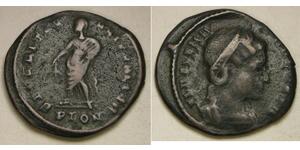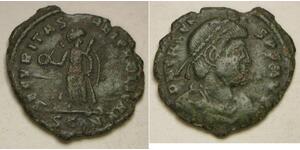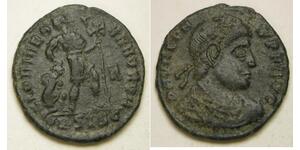
| Valens (328-378) | Link to Wikipedia |
Valens (328 – August 9, 378): History and Coinage
In the intricate tapestry of late antiquity, Valens stands as a testament to the complexities that defined the Roman Empire near its twilight before shifting into medieval forms. Born in Cibalae within the province of Pannonia Secunda around 328 AD, he was co-opted as emperor by his elder brother, Valentinian I. When they ascended to power following the deaths of Julian and Jovian, the brothers divided their vast responsibilities; Valens received command of the Eastern provinces.
This division meant that while Rome remained a distant seat in Italy, true political momentum shifted Eastward under his rule. His reign was marked by significant challenges on multiple fronts: securing the borders against Persia and settling Gothic migrations along the Danube river valley. Although he is often characterized as an indecisive general who met a tragic end at Adrianople in 378 AD, modern numismatists recognize him not merely for his military defeats or victories, but as a figurehead during a transformative period of Christian theology and imperial bureaucracy.
The Numismatic Legacy
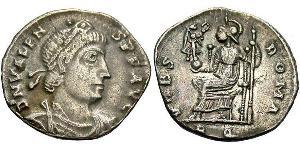
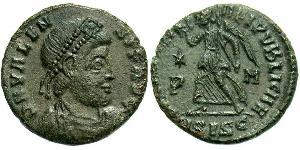
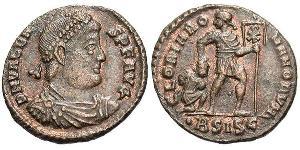
To the historian holding a coin today, Valens represents a pivotal moment in Western monetary history. Unlike many contemporary usurpers who might mint coins hastily to buy loyalty, or later barbarian leaders with crude strike marks, official Roman imperial denarii and aurei issued during his reign were products of sophisticated mints located primarily at Constantinople.
- The portrait found on these specimens was intended as a visual assertion of stability in the East. As an Arian Christian, Valens is historically noted for favoring theological compromises; this political stance occasionally influenced reverse legends and iconography used to appease different factions within the empire.
- Coinage from Constantinople during his rule bridges the gap between traditional Roman republican symbolism and the later distinct aesthetic of the Byzantine Empire. Collectors see these coins as artifacts showing how the administration handled internal unrest, particularly after Procopius attempted a coup.
A Collector's Perspective
While gold solidi became more common in the centuries that followed under emperors like Constantine or Theodosius, silver deniers from Valens' tenure are rarer and of immense historical interest. Their scarcity is due to several factors:
- Rarity: High quality preservation examples have been lost over time compared to later Byzantine issues.