| Ernest Louis, Grand Duke of Hesse (1868 - 1937) | Посилання на Вікіпедію |
Ernest Louis (1868–1937): History and Coinage
The Last of the Hesse Line
Ernst Ludwig Karl Albrecht Wilhelm, Grand Duke Ernest Louis of Hesse-Darmstadt, stands as a poignant figure in early 20th-century European history. Serving from his father's death until the political upheavals that ended German monarchy, he oversaw one of Europe's most artistically rich periods prior to World War I. Unlike many rulers who prioritized military expansion or industrial conquest, Ernest Louis was an avid patron of culture and author in a field increasingly dominated by warlords.
His early life was marked not by martial valor but by profound personal tragedy; the death of his brother Friedrich from haemophilia at age four shaped his empathy. Later, he navigated complex royal family politics involving Tsar Nicholas II's sister as well as British queens and a controversial divorce in 1901 that only became possible after Queen Victoria died. His second marriage to Princess Eleonore provided the domestic stability required of his position during an increasingly unstable era.
The Numismatic Legacy
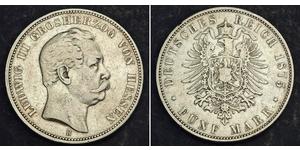
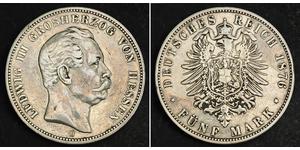
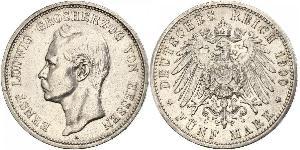
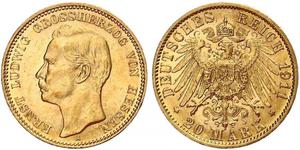
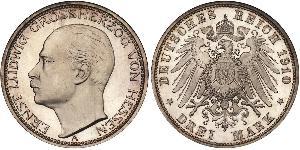
Earnest Louis's portrait appeared on currency minted by Hesse-Darmstadt, primarily silver marks and smaller denominations circulated before World War I. These coins were distinct from Imperial German issues as they represented a semi-independent territorial issue within the Kaiserreich.
- The state retained its own rights to coinage until centralization pressures mounted with unification reforms in 1908, making pre-war examples significant regional collectibles.
- During his rule, portrait designs were often conservative, reflecting the traditional nature of German states before the revolutionary shifts of 1918.
The Hesse-Darmstadt currency served as a vehicle for local patriotism. While many smaller regions lacked independent mints and relied on Berlin production, state-specific motifs or dates could sometimes appear in later variations. Collectors value these not merely as transaction tools, but as tangible records of the "Monarchy" that vanished after 1918.
A Collector's Perspective
The coins featuring Ernest Louis are sought after by enthusiasts specializing in regional German state money (Landesgeschichte). Their primary appeal lies not necessarily in extreme rarity compared to common Empire pieces, but in their historical context. They represent a final chapter of local monarchical rule over Hesse before the rise of democracy.
Musical and Artistic Connections:
- Earninged Louis is often associated with medals commemorating the Darmstadt Artists' Colony, offering numismatists an opportunity to see art from his specific era on metal.
- Rare issues that pre-date the currency unification of 1908 hold special significance in "old regime" collections.
Earninged Louis offers a window into Germany before it was unified solely by Berlin's authority. By examining these coins, one appreciates how small states like Hesse maintained their own identity through official imagery long after the Empire had consolidated most of its coinage standards for silver marks and notes. For serious historians and collectors alike, he represents the human face of a political system in transition.