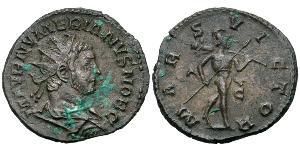
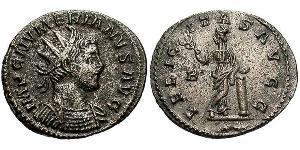
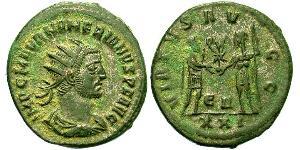
| Numerian (?-284) | Link to Wikipedia |
Numerian (reigned 283–284): History and Coinage
Marcus Aurelius Numerius, commonly known as Numerian, occupies a fleeting yet significant place in the annals of Roman history. As the son of Emperor Carus, he emerged from a period marked by intense military instability following the assassination of Probus and the rise of his father. His brief rule between 283 and 284 marks one of the final transitions before the empire reorganized under Diocletian’s Tetrarchy.
Numerian's historical importance lies in his connection to a turbulent military dynasty that sought continuity amidst succession disputes across the border with Persia. When Carus died, likely from illness or natural causes after campaigning against the Sassanids, responsibility passed rapidly between two brothers: Numerian and Carinus. While their father was celebrated as having conquered Persian territories bearing titles such as Persici maximi, Numerian's reign concluded in a manner that would alter imperial succession for centuries.
Numerius spent his later years traveling from Emesa to Bithynia, often accompanied by the army under Arrius Aper. During this period, historical accounts suggest he suffered significant health issues that confined him within closed coaches and prevented direct public audience with troops stationed along the coast near Chalcedon. This isolation is central to understanding why his coinage bears such a distinct political weight; it represents a dying branch of power before Diocletian assumed control.
The Legacy in Numismatics
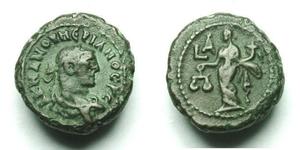
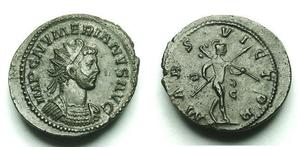
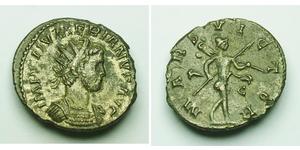
Innumerable collectors today seek coins depicting Numerian primarily because they are exceptionally rare and historically compact. While the dynasty was proclaimed after Carus secured his victory, mint activity for him ceased abruptly upon death at Bithynia in late 284 AD.
- Rarity: Few denominations survive from this specific era of Eastern coinage before the administrative reforms began reshaping currency standards under Diocletian.
- Historical Context: These coins serve as tangible evidence of an emperor whose death occurred within a military tent rather than through public coronation rites, highlighting the chaotic nature of late 3rd-century Rome.
- Minting Location: Because Numerian died in Asia Minor before returning to Italy or Rome for standard mint closures, coins featuring his portrait were produced primarily by mints under eastern authority and often reflect specific provincial designs from Cyzicus or Emesa.
The value of these artifacts extends beyond their face weight; they bridge the gap between the chaotic reigns prior to Carus' death and the stable structure introduced shortly thereafter. For those building collections focused on the Late Roman Empire, locating a piece minted during this window offers insight into how quickly political legitimacy was transferred under pressure from military commands.
Numerian represents a crucial moment in imperial continuity that ended abruptly yet shaped the course of future governance and monetary policy for generations to come. The scarcity of these coins makes them prized artifacts connecting collectors directly to the final days of his reign before Diocletian's rise solidified power across the empire.