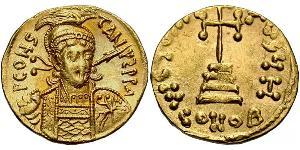
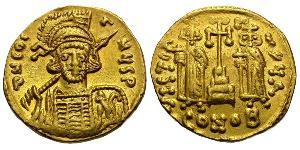
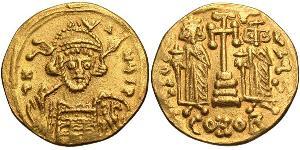
| Constantine IV (652-685) | Link to Wikipedia |
Constantine IV (c. 650 – July 10, 685): History and Coinage
In the annals of late Byzantine history, Emperor Constantine IV stands as a pivotal figure who preserved Constantinople from existential threats by Arab expansionists and civil unrest following his father's assassination in Sicily. His reign transformed the Empire after decades of defeats, securing the capital during historic sieges that would otherwise have toppled Roman authority for centuries.
Beyond military victory, Constantine achieved religious stability through the Sixth Ecumenical Council. He is venerated by the Eastern Orthodox Church as a saint whose defense not only secured physical borders but also spiritual orthodoxy within the Empire. This historical gravity provides essential context when examining his numismatic legacy today.
Navigating Economic and Political Challenges
To stabilize an economy strained by war and years of treasury relocation to Syracuse, Constantine IV implemented critical monetary reforms in 670 AD. Facing the aftermath of a succession crisis where usurpers like Mizizios attempted to seize power from Sicily with Arab aid, he needed immediate currency control.
The Imperial Follis
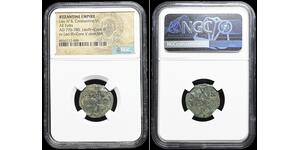
Historical records confirm that Constantine quadrupled the weight and copper content of his follis coinage. This was not merely an economic decision but a political statement intended to restore intrinsic value to imperial money. By reintroducing heavier coins based on Justinian I's earlier designs, he deliberately undermined currency issued by rebellious usurpers in Sicily.
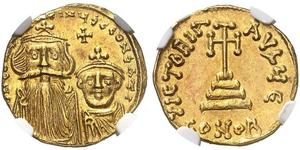
The portrait placed upon these copper follies served as propaganda for the restored dynasty; naming his son Justinian II further associated him with the golden age of imperial restoration. These portraits depict a young emperor presiding over a recovered state.
Rarity and Historical Significance
Coin collectors prize these issues primarily because they document an era where Byzantium regained initiative against Arab forces after fifteen years of raids. The coins themselves are scarce artifacts representing the restoration phase before Muawiyah's death in 680.
- Educational value is high as these types represent a specific stabilization period within the empire history timeline.
- The artistic standard reflects a return to weight and size under strict imperial policy after years of debasement.