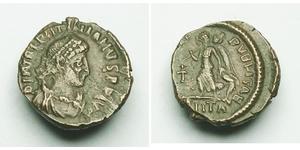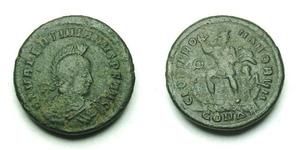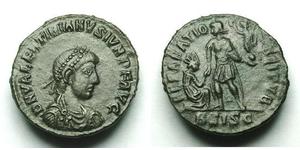
| Valentinian II (371-392) | Link to Wikipedia |
Valentinian II (371–392): The Boy Emperor of the West: History and Coinage
The Political Pawn as Imperial Symbol
Ruling from 375 until his mysterious death in 392, Valentinian II stands as a fascinating case study in fourth-century Roman history. While he may not have been the conqueror on horseback like his father or uncle, he represents a critical transition period where power shifted between generals and emperors.
Born to Emperor Valentinian I and Empress Justina, the young man was anointed at age four following his father's death. His early reign highlights one of history's strangest political structures: the elevation of infants as Augusti while their relatives or generals managed actual governance. This era served not only to preserve imperial continuity but also acted as a buffer against rival usurpers like Magnus Maximus, proving essential for legitimizing rule over Italy and North Africa during times of crisis.
Coinage: A Reflection of Shifting Power
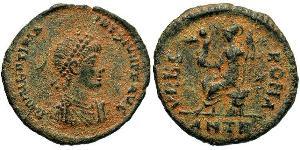
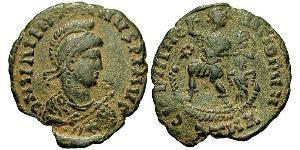
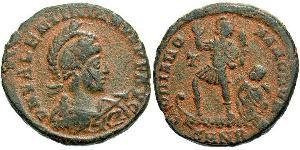
The numismatic portrait of Valentinian II serves as an invaluable record of these political struggles. Initially minted in Milan and later Vienne, coins bearing his name were complex tools for propaganda issued by the imperial government.
- Lifelong Types: Early issues show him alongside Gratian or Theodosius I to validate their shared authority, even when he held limited independent power. On Eastern coinage during these decades, Valentinian's portrait often appeared with a continuous legend, signifying his status as the recognized heir.
- The Restoration Period: Following the defeat of usurper Maximus in 387–389, new coins circulated celebrating Theodosius I’s return and restoration. These medals were vital for unifying diverse provinces under a single dynasty once more before Valentinian was left effectively as a puppet to his general Arbogast.
- Posthumous Issues: After 392, coinage ceased immediately or changed hands abruptly between the factions of Theodosius and Arbogast. Later pieces depict him solely, reflecting how his death ended the last thread connecting the Julian line in Gaul to Rome before being replaced by Honorius.
The Allure for Collectors
Coin enthusiasts are drawn to Valentinian II not merely because of market value, but due to their rich historical narrative. For beginners and intermediate collectors, his coinage offers a window into the fragility of Roman authority when emperors were children.
Rarity is another key factor; coins minted under Arbogast in Gaul (Vienne) are less common than those from Rome or Italy, offering an opportunity for specialized regional collections. Furthermore, studying these pieces helps collectors understand how art and legend functioned during a time when Christianity was becoming the state religion while pagan traditions were being suppressed.
The coins of Valentinian II remain a staple in ancient imperial series, providing context regarding political legitimacy that textbooks cannot fully capture on their own. Their acquisition allows one to hold tangible fragments from an era where generals wrote emperors with ink and silver alloy alike.