| Muhammad Ali Jinnah | Link to Wikipedia |
Muhammad Ali Jinnah (1876–1948): History and Coinage
Muhammad Ali Jinnah remains one of the most defining figures in modern South Asian history, revered as the founder of Pakistan. Born into a merchant family on 25 December 1876 near Karachi, he initially pursued a distinguished legal career at Lincoln's Inn before dedicating himself to nation-building politics. His political journey was characterized by a complex evolution from advocating for Hindu-Muslilm unity within the Indian National Congress in the early 1900s to championing self-determination for Muslims as leader of the All-India Muslim League following his resignation from Congress over differences in strategy.
As British influence waned during and after World War II, Jinnah steered negotiations that resulted in the partition of India. By August 1947, he successfully transformed the concept into reality through the establishment of an independent state. Upon assuming office as Pakistan's first Governor-General until his death just over a year later, his legacy is rooted in establishing sovereignty and safeguarding rights for refugees migrating across borders.
Relationship to Coinage
The currency systems governing this region were heavily influenced by the British Empire before independence. Prior to 1948, coins depicted reigning monarchs such as Queen Victoria or George VI without representation of local leaders in official circulation designs for indigenous nations. However, upon Pakistan's creation, establishing national identity required a new visual language that replaced colonial imagery with sovereign symbols.
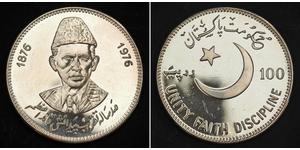
Consequently, Jinnah began to appear on post-independence issues issued by the Dominion and Republic governments starting from 1948 onwards. While early notes featured him extensively as Quaid-e-Azam, his name or portrait appeared in specific commemorative numismatic releases celebrating national milestones like anniversaries of independence.
Why Collectors Value These Coins
- Historical Significance:
- Numerous collectors acquire these pieces to preserve the memory of nation-building during a critical geopolitical shift from colonialism to self-rule.
- Patriotic Sentiment:
- The imagery serves as an enduring symbol for generations born after independence, connecting modern holders directly with foundational history rather than abstract dates.
- Rarity and Variety:
- Specific denominations issued during the immediate post-war period or commemorative issues often hold distinct historical value compared to later general circulation strikes minted at high volumes for daily trade purposes across borders. Exploring these items allows enthusiasts to physically examine how history transitions onto metal intended for common use yet preserved in collections.
By studying coins depicting Jinnah, collectors understand that numismatics serves as a tangible link between political ambition and economic life during the founding era of Pakistan.