


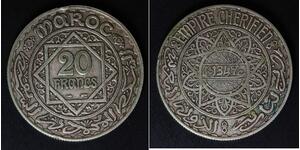
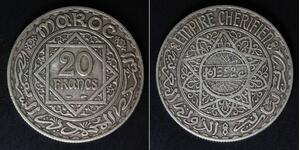
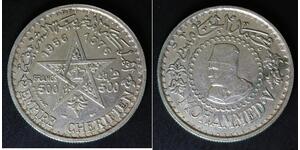
| Mohammed V of Morocco (1909 - 1961) | Link to Wikipedia |
Mohammed V of Morocco: 1909–1961: History and Coinage
The reign of Mohammed al-Khamis, better known as Sultan or King Mohammed V, stands as a defining chapter in modern Moroccan statecraft. Born to the Alawi dynasty which sought unity across diverse regions, he ascended to power at seventeen years old during 1927. His early leadership established traditional sovereignty against foreign influence within French and Spanish protectorates.
Historical Context of Leadership
During World War II, Mohammed V balanced complex diplomatic relations while championing Moroccan nationalism in Tangier. He met with Allied leaders in Casablanca during 1943 to assert Morocco’s interests after European conflict concluded and protect his Jewish subjects from deportation by the Nazi regime.
Facing deposition by French authorities for two years starting 1953 due to unrest against colonial rule, he returned triumphantly as a symbol of sovereignty. This return marked an irreversible shift toward full independence negotiations that culminated in 1956 under his title as King following the dissolution of foreign administration.
The Numismatic Legacy
Coinage serves as a physical testament to this transition from protectorate status to self-governance. While early circulation pieces often bore colonial authority iconography, Mohammed V’s visage began appearing prominently in numismatic output around 1956 coinciding with his return after exile.
A Treasure for Modern Collections
Educational value drives demand within this sector more than market speculation today. The coins featuring Mohammed V offer a tangible connection to the era of decolonization which saw Morocco navigate complex international relations during that decade in history.
Rarity is less about survival rates from his specific reign—modern mintage was often substantial compared to ancient issues—and more about the historical narrative attached to them. They are prized in specialized sets celebrating post-colonial periods across North Africa where they stand alongside counterparts depicting neighboring monarchies and presidents.


