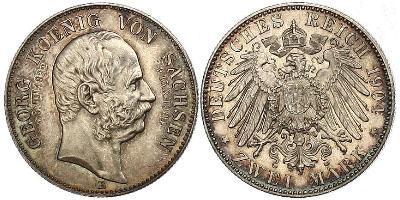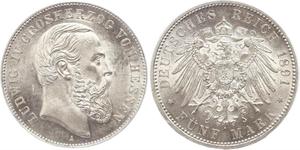
| Louis IV, Grand Duke of Hesse | Link to Wikipedia |
Louis IV (1837–1892): History and Coinage
Louis IV, Grand Duke of Hesse and by Rhine, occupied a singular position within nineteenth-century European history as a sovereign deeply intertwined with the British monarchy through his first marriage to Princess Alice. Born in Darmstadt on September 12, 1837, he was initially third-in-line for the throne but ascended unexpectedly following family deaths during an era of intense political change.
The Grand Duchy became a focal point for royal diplomacy after Louis fought alongside Prussia against France in the Franco-Prussian War. His military service repaired diplomatic ties with the House of Hohenzollern and led to his knighthood within British orders. These international connections made him an influential figure beyond local borders, establishing Hesse-Darmstadt as a respected member of European aristocratic circles.
The Sovereign on State Currency
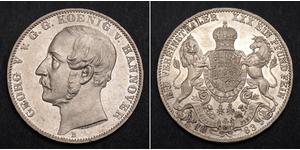
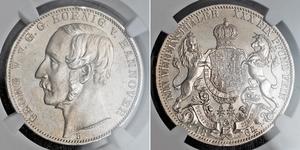
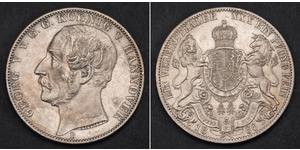
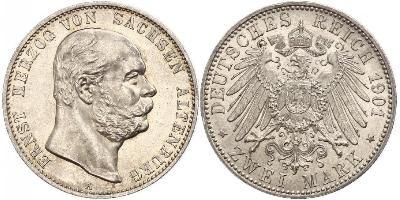
In the nineteenth century, state authority was frequently displayed through circulation currency bearing the portrait or name of the reigning ruler. During his reign from 1877 until his death in 1892, coins depicting Louis IV were issued by local mints before full German Empire standardization occurred.
- Lifetime Portraits: Coins struck during his rule served to assert the continuity of House Hesse-Darmstadt within North Germany and later under Imperial protection.
- Royal Recognition: His marriage elevated him in rank. While standard circulation often utilized generic imperial designs, commemorative issues sometimes highlighted specific dynastic connections between German states and Great Britain through his royal links with Queen Victoria's lineage.
The Value for Collectors
Nuanced collectors of this era prize coins depicting Louis IV not only because they are scarce, but due to their narrative weight. The portraits on Hessian silver pieces capture the artistic trends of Bismarckian Germany while representing a family deeply connected to London and St Petersburg.
- Rarity: Silver coins from this period often have low mintage quantities relative to gold, making well-preserved examples difficult to find in modern circulation sets.
- Dynastic Links: Enthusiasts seeking royal memorabilia find a direct connection between these German issues and the House of Windsor through his wife. Dual collectors often seek to complete sets from both houses.
Owning coins issued during or immediately after his rule allows an individual to hold tangible fragments of a dynasty that defined early modern Europe's political landscape through marriage alliances beyond its borders. Understanding these issues enriches one's knowledge of German monetary history alongside broader genealogical narratives found within numismatics.