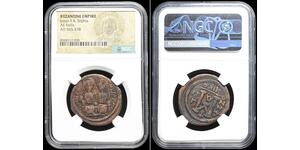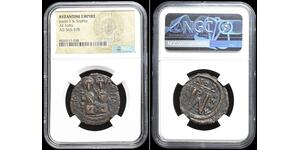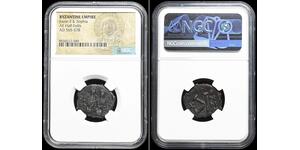
| Justin II (520-578) | Link to Wikipedia |
Justin II (r. 565–578): History and Coinage
In the late sixth century, the Eastern Roman Empire navigated a critical transition following the death of Justinian I in November 565.
The nephew of this celebrated emperor, Justin assumed the throne after a formal declaration recorded by his court officials. While he inherited an expanded territory spanning much of Europe and North Africa, resources were significantly strained compared to his predecessor's era. His administration was defined by decisive shifts that would ripple through history for generations.
Histories record his early life as somewhat obscure before becoming a central figure in high politics around the 540s following his marriage to Sophia. He served variously as curopalates and handled diplomatic embassies, earning favor among court officials like Callinicus who secured his succession at Justinian's deathbed moment.
Once crowned Augustus, Justin reversed many policies associated with the restoration era. To restore financial stability, he repaid treasury debts and returned tax obligations to subjects from years prior to 560. He burned bonds as a symbolic gesture of relief for his populace.
Mintmarks and Imperial Authority
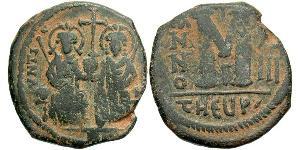
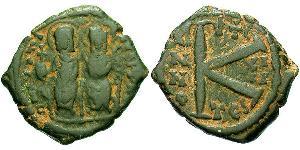
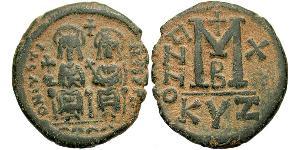
The imperial mints struck coins depicting Justin during his lifetime, primarily in gold solidi issued under the authority of Constantinople's treasury department. These issues reflect his decision to halt tribute payments traditionally made to border enemies like the Avars instead funding new military alliances.
Collectors find significance in these pieces because they represent a specific historical moment where Byzantium shifted from buying off threats toward more direct conflict, particularly with Sassanid Persia and Lombards in Italy. The currency circulated throughout provinces affected by his hardline diplomatic stance against the Avars.
A Collector's Perspective
Enthusiasts appreciate Justin II for several historical reasons:
- Economic Policy: Coins issued during this reign show the continuity of imperial power even as fiscal policies changed dramatically to stop subsidies.
- Rare Issues: Specific series from his time connect well with collections focusing on late sixth-century Byzantine history prior to widespread iconoclastic debates later centuries.
The portrait or name appearing on these medals serves as a tangible link to the end of an era where Rome maintained borders against significant threats. The coins provide visual evidence that while political turmoil and mental illness clouded his final years, the state authority continued producing currency until shortly after 578.