| Gordian III (225-244) | Link to Wikipedia |
Gordian III 20 January 225 – c. February 244: History and Coinage
Welcome to the gallery, where we explore one of history's most tragic yet fascinating rulers: Gordian III. His brief reign offers a vivid snapshot of Rome at its zenith before it began to fracture into smaller political fragments.
A Legacy Born in Turbulence
Gordian ascended the throne as an adolescent, barely thirteen years old, following the chaotic Year of the Six Emperors. He became the second-youngest sole ruler of the Empire, a title given to him by his family and political maneuvering rather than birthright in its modern sense. His grandfather was Gordian I, and his uncle, Gordian II, had attempted to seize power only months before they were killed.
This lineage mattered immensely for public perception; he wore the laurel of imperial ancestors while leading the Roman armies against Sassanid Persia under Shapur I. During a critical campaign around 243 AD, after his father-in-law and Praetorian prefect Timesitheus died in unclear circumstances—likely from illness or assassination at Misiche—the responsibility to lead fell entirely on this young emperor. He joined the legions directly to command operations against the Persians.
The historical narrative highlights a brave youth willing to ride into battle, yet his story ends abruptly after rumors of his death circled Rome. The exact cause remains debated between ancient historians and modern scholars—some say he fell from his horse, others that he was murdered by disheartened soldiers or slain in combat at the Battle of Misiche. Regardless of how it unfolded, this final campaign solidified his legacy as a soldier-emperor who prioritized military engagement over courtly isolation.
The Emperor on Metal
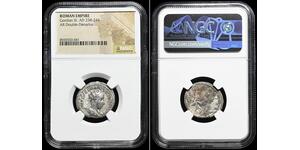
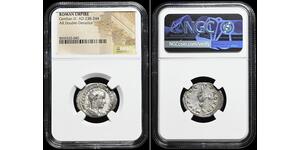
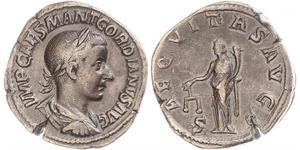
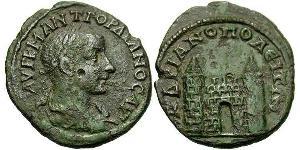
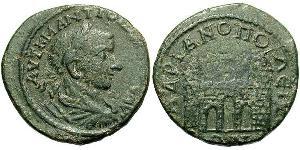
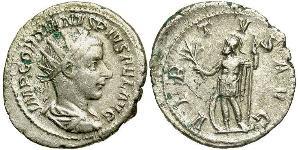
You may often see coins from Rome bearing the profile of Gordian III during their circulation or in museum collections. The Roman state minted these issues specifically to commemorate the victories achieved under his command and to celebrate the successful repulsion of Sassanid forces, which ended with a major victory over Shapur I.
Coinage served as essential political propaganda; it was how ordinary citizens learned about emperors who ruled at distances.
- The portraits usually show Gordian in military dress or civilian attire, reflecting his role leading from the front lines rather than sitting behind a desk
- Symbols on these coins often reference specific victories such as the Battle of Resaena (243)
While he was young when first acclamed to Caesar in 238 and then sole emperor later that same year, his coinage reflects both a youthful face and the weight of high office. Numismatists particularly value these issues because they bridge two distinct periods: the transition from the Severan dynasty era to what would eventually become Philip the Arab's rule.
A Collector's Treasure
Coin collectors are drawn to pieces depicting Gordian III not just for their rarity, but as tangible links to a period of significant military campaigning. While many coins survive from more stable periods in history, those issued during his short tenure—especially those documenting the victory over Persia before 244 AD—are rare.
The artistic quality remains excellent despite political instability; these pieces display high relief portraits and intricate details that rival much later imperial issues of a century or so after his death. By examining coins bearing Gordian III's profile, you gain insight into the Roman army in action during an era when emperors fought personally alongside their soldiers rather than delegating command entirely to generals.
In this sense, exploring these ancient artifacts is not merely about collecting metal but understanding a pivotal moment where Rome pushed its eastern boundaries against one of history's greatest rivals before collapsing under the weight of war. Whether you are an expert or just starting out on your journey through time and money, Gordian III stands as a testament to youthful bravery in antiquity.