| Constans I (320-350) | Link to Wikipedia |
Constans (c. 323 – 350): History and Coinage
Flavius Julius Constans served as one-third of the Roman imperial triumvirate following the passing of his father, Constantine the Great. Ruling from 337 until 350 AD, he presided over Western provinces during a volatile transition period marked by internal conflict and external threats from Sarmatians and Franks.
His tenure represents a critical chapter in late Roman history where imperial power was initially shared to stabilize governance before fracturing once more after 340 AD. While his reign ended tragically, often described as brief due to rapid succession of brothers fighting one another, he effectively consolidated Italy and Illyricum under his administration following the death of Constantine II in battle.
Beyond military prowess against frontier tribes like the Franks and Alamanni, Constans navigated a religiously complex landscape by supporting Nicene orthodoxy. This political stance influenced how coins depicted imagery transitioning away from purely pagan symbols toward more orthodox representations as he traveled to places like Roman Britain in 343.
Relationship to Coinage
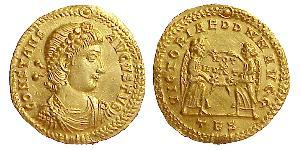
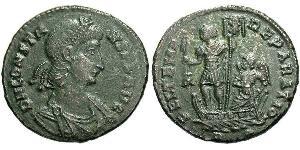
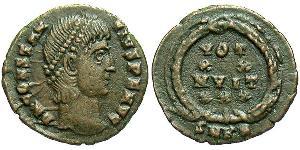
In this era, coin minting was a vital instrument of imperial propaganda designed to project authority and unity across the empire. Collectors encounter his likeness primarily on brass antoniniani intended for circulation among soldiers and merchants in Gaul, as well as gold denarii struck at Rome during major festivals.
When he fell from power following Magnentius' coup, these coins were often repurposed or replaced with usurper iconography within a year. Numismatists can observe how mint standards shifted drastically when administrative control passed to the new regime in 350 AD. The legends on his currency changed as political alliances fluctuated between rival factions and loyalist generals.
Why Collectors Value These Coins
The allure lies not merely in scarcity but historical narrative preserved on metal rather than rarity alone for general collectors, though rare varieties exist among specialists. While these issues are generally abundant within intermediate collections representing the Constantinian dynasty era, they remain significant for specialized studies of the 4th-century Roman West.
Understanding Constans' coinage offers insights into the artistic conventions established under his father's workshop yet evolved to suit younger leadership styles before Julian arrived later in the century. For enthusiasts analyzing late antiquity political shifts or studying how loyalty shifted in a professionalized army context, these artifacts are essential physical evidence.
The story is captured on bronze and brass rather than rare gold pieces that require high budgets to acquire. These coins represent tangible records of the turbulent 350s era when Rome faced usurpers like Magnentius while maintaining stability against external enemies across its vast borders, making them indispensable for any serious study of imperial administration.