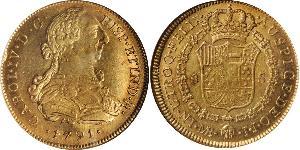
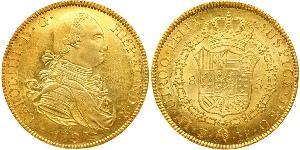
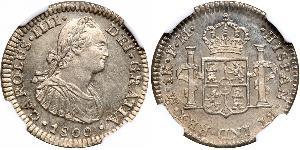
| Charles IV of Spain (1748-1819) | Link to Wikipedia |
Charles IV of Spain (1748–1819): History and Coinage
Welcome to our collection, where the tangible artifacts connect us directly with a pivotal era in European history. Charles IV ruled as King of Spain during one of its most volatile periods in modern memory. Ascending to the throne following his father's death in 1788, he inherited an empire that outwardly appeared stable but was internally fragile. Unlike his predecessor who actively governed reforms, Charles preferred hunting and relied heavily on ministers like Manuel de Godoy. His reign eventually concluded with a forced abdication under pressure from Napoleon Bonaparte at Bayonne.
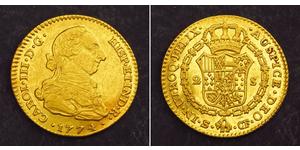
The transition of power marked the fracture of Bourbon independence for Spain in favor of French domination. This political turbulence is vividly preserved within numismatics. Coins depicting Charles IV were primarily issued by the Spanish crown and various colonial mints in territories like New Granada (modern-day Colombia) before his ouster.
The Numismatic Connection
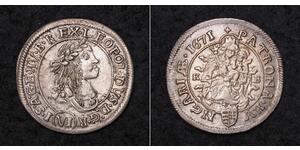
Coinage during this specific reign serves as a historical barometer of shifting sovereignty. During Charles IV's lifetime, portraits often appeared on silver reales and gold escudos to legitimize the monarchy despite increasing popular discontent. Following his abdication, subsequent regimes continued minting currency that referenced previous authority or issued new designs under Ferdinand VII and Napoleon’s brother Joseph Bonaparte.
The Curator's Insight: Why These Coins Matter
- Cultural Transition: Collectors value these pieces for witnessing the shift from a traditional monarchy to an era of Napoleonic interference in Spanish governance and identity.
- Economic Context: The quality and circulation patterns reflect financial stress caused by Godoy’s costly alliances against Britain, influencing the metal content found on coins today.
- Rarity Factors: War disruptions to mint operations created distinct varieties. Finding high-grade examples helps collectors piece together the economic reality of late-eighteenth-century Spain and its vast overseas possessions.
In summary, holding a coin featuring Charles IV is like possessing a small slice of pre-Napoleonic empire history. These pieces remind us that currency was not merely money; it was the physical representation of statehood during times of great transformation for your region and beyond.