| View |
 Schwarzburg-Sondershausen (1599-1920)
| Schwarzburg-Sondershausen (1599-1920) | Link to Wikipedia |
Schwarzburg-Sondershausen: History, Coinage and Collectibles
Welcome to an exploration of one of Germany's lesser-known but historically rich micro-states. As we gather before the glass case where small silver disks shimmer with centuries-old luster, imagine stepping into a Thuringian town square in the 18th or 19th century. Life here was governed not just by local customs and laws but also by the flow of currency that connected Sondershausen to wider economic currents.
Historical Background
The Principality of Schwarzburg-Sondershausen occupied a strategic position in Central Europe, deeply embedded within the complex political tapestry of Thuringia. For centuries, this territory was ruled by the House of Schwarzburg, a noble family that carefully navigated the shifting alliances between powerful neighbors like Saxony and Prussia. The principal city served as an administrative hub where local nobility managed everything from tolls to trade relations.
A defining characteristic of its history was a delicate balance between autonomy and external pressure. During the Napoleonic era, sovereignty underwent several transformations due to diplomatic realignments within Europe. After Napoleon’s defeat, the Congress of Vienna reshaped borders across continental states. By 1863, Schwarzburg-Sondershausen joined with another branch to form a unified principality that eventually became part of Prussia following significant territorial adjustments. This history is crucial for understanding why local coinage evolved so rapidly as larger empires began standardizing their monetary systems.
Currency and Coinage History
In the medieval period, commerce relied heavily on regional silver thalers minted by various towns across the Holy Roman Empire. The region produced its own distinct coins which circulated alongside currency from Saxony or Leipzig because trade routes were vital to local prosperity.
- Early circulation consisted largely of silver and copper tokens issued under princely authority, reflecting feudal independence.
This alignment changed how money was perceived and spent daily within marketplaces. The transition from local feudal issues to Prussian-backed marks allowed for a unified economic identity, yet collectors often find the earlier sovereign pieces most distinctively representative of this era's artistic ambition.
Mints and Coin Production
The mechanics behind coin production in such small states are fascinating. Because Schwarzburg-Sondershausen was relatively modest in population and wealth compared to great powers, its coins were sometimes produced by contractors operating under local oversight rather than a permanent public mint staffed solely for the crown.
- Artistic quality relied heavily on skilled engravers who brought national styles down into tiny territorial realms. Engravings of heraldic crests often reflected artistic trends from larger cities like Vienna or Berlin, transported through networks of guilds and merchants.
This hybrid approach explains why you may find coins from this region bearing designs indistinguishable to a modern eye, except perhaps in minute details regarding wear and patina found only upon careful inspection under magnification. The craftsmanship of the era speaks volumes about local pride even when adhering strictly to royal decrees.
Notable Coins
To understand what makes these artifacts valuable beyond market price, one must appreciate their historical context through specific examples that stand out in any collection.
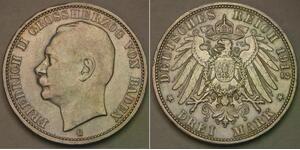
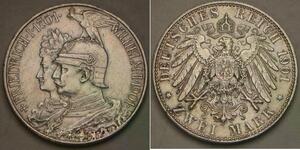
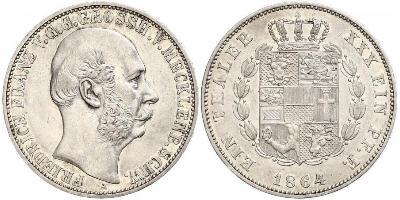
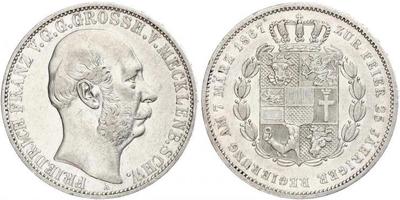
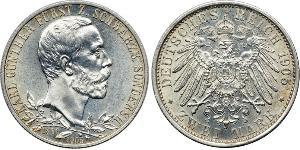
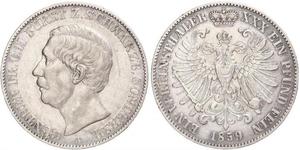
The gold thaler bearing the arms of Schwarzburg stands as a primary example. These pieces feature an obverse design where the ruling prince is depicted alongside protective heraldry symbols often including eagles or crests common to noble houses across Germany. On the reverse, values were clearly inscribed and usually denominated in silver equivalents for clarity during exchange.
Copper coins provide another window into daily life within Thuringia. Halfpennies from Sondershausen depict simple motifs representing trade goods like wheat sheaves or local industrial symbols used to mint money specifically for market transactions at weekly fairs held throughout the town square.
Possibly more significant is the period when coins were minted before full integration into Prussian standards. These early issues show unique lettering styles that distinguish them from later uniform marks issued under Berlin control. Collectors value these pieces because they represent a specific moment where local tradition battled standardization across an emerging German economic space.
The final examples in any meaningful collection are those minted shortly before 1863, when Schwarzburg-Sondershausen began its political integration with other states for administrative efficiency and stability. These transitional coins capture the essence of a community adapting to modern monetary systems while retaining distinct local identifiers that vanished later on.
Cultural Legacy
The numismatic history serves as more than just records of value; it preserves cultural identity. Heraldic symbols such as black eagles or other regional motifs appear repeatedly across different denominations and eras, acting as a silent language conveying loyalty to the ruling dynasty while maintaining ties to broader European traditions.
Minted coins also reflected religious influence prevalent in German states at this time, with inscriptions sometimes containing Latin phrases used universally by scholars but often simplified for general populace use. This blend of high scholarship and accessible commerce is found in many surviving examples which feature bilingual legends alongside traditional Christian iconography typical of the Lutheran faith dominant throughout Thuringia.
The enduring presence of these designs highlights how economic tools double as art forms that document a society’s values over time. They tell stories of rulership, religious devotion and merchant ambition without needing words to explain them fully at first glance.
For collectors
Schwarzburg-Sondershausen offers unique opportunities for those who seek depth in their numismatic collections rather than simple face value rarity alone. The small size of the principality often results in lower production volumes during specific historical windows compared to larger nations like Prussia or Austria.
This scarcity combined with rich heraldic details makes these pieces particularly meaningful as educational artifacts that can be displayed alongside European history books for context appreciation at home study sessions among families who enjoy collecting items from different regions of Europe.
Focusing on condition and historical narrative helps enthusiasts appreciate the true value beyond catalog numbers alone. When viewing a coin, consider its role in facilitating local trade or celebrating an important anniversary within Thuringia before becoming part of private collections today where these pieces continue telling stories about governance and commerce across centuries past to present day observers around globe.
The legacy remains vibrant for collectors seeking authentic artifacts representing the intricate world of medieval to modern Germany, providing a tangible link to those who once governed trade routes or walked streets in ancient markets long since vanished beneath layers time itself has built upon earth today we stand still and reflect quietly on how such tiny pieces shaped vast histories without words spoken directly from mouths alone.