| View |
| preceded by | |
|
|||||||||||
 Principality of Reuss-Greiz (1778 - 1918)
|
|||||||||||


| succeeded by |
| Principality of Reuss-Greiz (1778 - 1918) | Link to Wikipedia |
Principality of Reuss-Greiz: History, Coinage and Collectibles
In the intricate tapestry of German monetary history, few regions capture as much attention from specialists as this small yet historically significant state within Central Europe. Though modest in territorial size compared to its imperial neighbors, the realm ruled by the House of Reuss offers a fascinating window into the complexities of nineteenth and early twentieth-century numismatics. For those who appreciate both artistry and provenance, tracing the financial evolution from a sovereign principality through the German Empire provides rich storytelling opportunities alongside solid historical data.
Historical Background
The story begins with an elevation to princely status in 1778, transforming local Counts into Princes bearing titles such as Prince Reuss of Greiz. The lineage is characterized by a unique nomenclature where every male heir bore the name Heinrich, honoring Emperor Heinrich VI centuries prior. This singular practice allows historians and collectors alike to track succession purely through birth order rather than reign length. The most famous member of this house was not a ruler born on these lands but one who married into royalty: Princess Hermine Reuss of Greiz became the second wife of former German Emperor Wilhelm II, cementing a direct lineage between this minor state and the imperial throne at Berlin.
Culturally, the principality existed as a buffer zone within the larger unification process that forged modern Germany. By 1902, following significant political shifts like World War I, it had evolved into the People's State of Reuss before merging with junior lines and eventually dissolving to become part of Thuringia in 1927. This period reflects a time when local sovereignty gave way to centralized governance under the flag colors once debated at Frankfurt but adopted by Germany later.
Currency and Coinage History
The evolution of money in this region mirrors broader political changes across Central Europe before 1905. Initially, trade relied heavily on silver thalers minted locally or contracted from neighboring German states as a means to ensure liquidity for local merchants. However, the introduction of standardized currency under Imperial Law brought about significant shifts in what appeared on coinage.
As part of the expanding German Empire, Greiz was required to align its economic standards with those established by Berlin and Vienna, utilizing silver Marks and Goldmarks before World War I ended these eras. Collectors often note that while some small states minted their own designs for low denominations during the early empire period, high-value issues were frequently produced under strict supervision in major cities like Dresden or Munich to guarantee purity.
This economic integration had profound effects on coin design and composition standards over time as the state sought balance between local identity and imperial unity. The transition from traditional noble motifs used by previous counts to modern republican symbols seen after 1920 provides a clear chronological timeline for those cataloging regional German currency issues.
Mints and Coin Production
The production of coinage in these territories was heavily reliant on established workshops rather than maintaining large local factories. This reliance ensured that high-quality finishes were maintained consistent with the reputation expected by collectors seeking genuine specimens from earlier periods. Artistic trends seen across Europe during this era found their way into portraits and heraldry stamped onto silver rounds.
During times of political change, such as after 1848 when new names took hold, designs on circulating currency were altered to reflect the changing government or dynastic lines without completely breaking continuity. Mint technologies evolved from hand-struck operations toward more mechanized presses that improved sharpness in relief details found on obverse and reverse sides of thalers.
The legacy is preserved in surviving high-grade examples, though wear can be deceptive given how these coins were used daily for market transactions. Skilled numismatists examine subtle differences in strike patterns to distinguish between private contracts minted locally versus those authorized strictly under Berlin control during wartime shortages when metal scarcity threatened normal production cycles.
Notable Coins
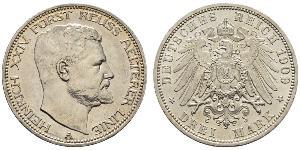
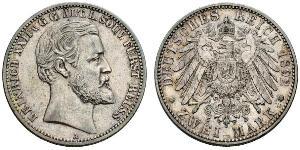
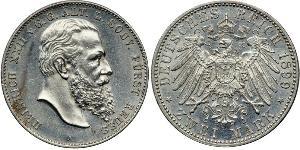
Coin collectors are often drawn first by portraits of the rulers themselves. The reigns spanning from 1778 to WWI saw many issues bearing names and faces associated with different generations named Heinrich, yet these were numbered sequentially based on birth order rather than how long they reigned.
- The Transition Issues: Early dates mark the shift in title when counts gained princely status after 1778. The change is often noted by new mint marks or altered legends on coin edges, making these early issues highly sought for completeness collections covering regional history from before unification.
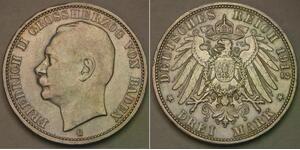
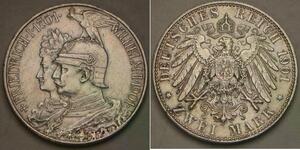
- The Imperial Eagle: Post-1871 examples display the double-headed imperial eagle used across all German states under Bismarck. These are prized by historians wishing to see how smaller entities submitted their coinage aesthetics into conformity with a larger national movement, though local heraldry often remained on reverse sides.
- The End of an Era: The final decades leading up to 1927 feature coins issued just before the death of Heinrich XXIV. These issues reflect the dissolution era where designs might bear both pre-merger arms and transitional symbols used after annexation into Thuringia, serving as historical markers for collectors documenting political changes.
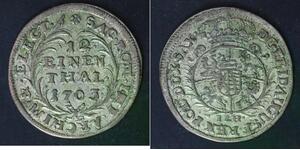
The design features often included coats of arms representing the House Reuss rather than generic national emblems on lower denominations. This allows buyers to focus more closely on artistic merit since reverse details like specific heraldic supporters offer clues about exact dates and mints used during those centuries.
Cultural Legacy
Beyond mere metal content, the coinage of these lands carries deep cultural resonance regarding their rulers. The use of names honoring distant emperors shows a deliberate cultivation of prestige among smaller nobility that sought connection with higher German history through art and naming conventions.
For Collectors
This principality offers substantial value to those who study the intersection of personal monarchy within federal structures, especially before 1905. While rare compared to larger powers like Bavaria or Wurttemberg for gold issues alone, silver coins remain available in circulation grades that offer access points into broader numismatic markets without requiring significant capital investment.
The historical connection between regional leaders and imperial families provides a unique context rarely found elsewhere outside Austria-Hungary. It represents an era where local identity remained visible even as Germany moved toward total state standardization before collapse after 1927. The preservation of Frankfurt flags within the territory itself speaks to its role in democratic development prior to eventual German dissolution.
Possessing a piece from this period allows one to hold tangible history regarding family alliances with Wilhelminian Germany and local governance evolution during critical decades before global conflict reshaped borders entirely. Each coin tells part of how the old world merged into modern states while retaining unique artistic characteristics that define their provenance today.