| View |
| preceded by | |
 Pomerania
|
| succeeded by |
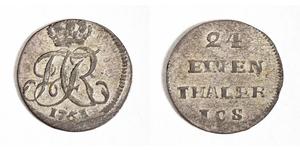
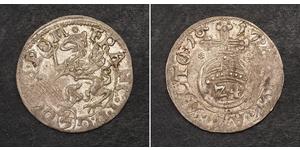
| Pomerania | Link to Wikipedia |
Pomerania: History, Coinage and Collectibles
Welcome aboard one of Europe’s most fascinating numismatic voyages. Imagine standing on the jagged shores where three seas meet—though here, we stand on a peninsula bathed by only one. Welcome to Pomerania, the southern shore of the Baltic Sea. To an art historian or archaeologist, it is defined by moraine-dammed lakes and terminal plains; to us, collectors of silver and brass, it represents a crucible where diverse cultures met in metal form. This article serves as your guide through the region's rich numismatic heritage.
Historical Background
The story of Pomerania is defined by its position at the intersection of several great civilizations. Situated between Poland and Germany, along the Bay of Pomerania (the Polish Bałtyk), this land has served as a maritime bridge connecting Central Europe with Scandinavia since antiquity.
Settlement in the region began over 13,000 years ago, yet its distinct historical identity emerged around the eleventh century. The first recorded mention dates to an imperial document of 1046 referring to Zemuzil, Duke of Pomerania. This era marked a transition from tribal autonomy to organized ducal structures that would shape coin production for centuries.
The region's history is also deeply rooted in its geography: the Baltic Ridge and vast forests created an inland frontier distinct from the coast itself. The maritime cities—Gdańsk (Danzig), Szczecin, Stettin, and Słupsk—became pillars of commerce on the High Seas.
In the Middle Ages, Pomerania was integral to the Hanseatic League. This powerful trade confederation necessitated a reliable currency system. As merchants sailed from Lübeck or Bruges toward Gdańsk Bay (Danziger Bucht), they required coinage stable enough for international exchange but distinct enough to identify their origin.
The political history was complex, oscillating between control by the Teutonic Order, Poland, and later Brandenburg-Prussia. This fluidity of rule meant that coins from Pomerania often bore the marks of different dynasties: the Piasts in Polabian Pomerelia, followed by dukes of the Margraviate of Brandenburg or Swedes during their brief occupation.
This political volatility was not merely a footnote; it drove economic change. The "Pommern" (in German usage) were historically split into Hither and Farther Pomerania in one context, or combined with Pomerelia in another depending on the state administration ruling at that time. This terminology reflects itself in coin designs: sometimes you find mint marks indicating a city within Brandenburg-Prussia, other times distinct Polish administrative zones.
Currency and Coinage History
The evolution of money in Pomerania mirrors its economic rise from an agrarian society to a global trade hub. Early settlements utilized barter or simple tokens along the rivers Recknitz, Trebel, Tollense, and Augraben which flowed into the sea.
As urbanization grew around Stettin (Szczecin) in Szczecin Lagoon (Schwedt), minting operations became sophisticated. The region adopted coinage standards that were heavily influenced by their neighbors: Lübeck to the north and Krakow/Wrocław (Cracovia) to the south.
The most significant era began during the 15th century, where "Königsmünzen" (King's coins) and "Ducal Groschen" became prevalent. The region was a key producer of silver grosz. During these periods, Pomeranian dukes often issued currency that rivaled major German emporiums in quality.
Another defining moment occurred with the rise of Prussia under Frederick William I (the Soldier), and later his successors. This era saw massive minting efforts to support a growing industrial economy centered on Szczecin, which had become one of Europe's largest ports for grain export by 1700.
The transition into modernity brought further changes. The region was involved in the monetary unification drives that swept across German-speaking lands and Poland prior to World War II (though we will not detail wars here). However, during this time, Pomerania produced currency for both the Kingdom of Prussia and independent Polish voivodeships.
The unique geography played a role too. Because much of western Pomerania comprises islands like Rügen or Usedom/Uznam, trade routes were often maritime. This influenced coin production techniques that required durability against salt air and rough handling by sailors returning from the Baltic fishing grounds.
Mints and Coin Production
The landscape defined where the coins were struck. Western Pomerania (Vorpommern) in German states housed several historical mints, including those serving Mecklenburg-Western Pomerania districts like Greifswald or Stettin.
Prior to 19th-century industrialization, minting was a craft of local necessity. In the eastern section (Farther Pomerelia), cities like Toruń (Thorn) and Bydgoszcz served as central hubs for currency distribution into this zone due to proximity to Poland's administrative centers.
The mints operated in an environment that required precision against a backdrop of natural wealth. The region is rich in agricultural produce—hemp, flax—and grain which were transported via river barges from the Trebel and Tollense rivers directly out into the Bay of Pomerania (Hollender).
This trade demanded standardization. You will find coins that show signs of this commercial need: clean silver compositions for long-distance traders versus copper-alloy types or lower denominations meant solely for local peasants at weekly markets near small towns.
Notable Coins
To the collector, Pomerania's coinage is distinguished by its blend of conservative iconography with bold maritime motifs. Several pieces stand out in any collection:
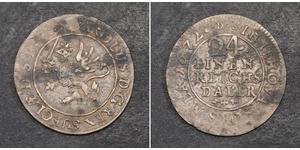
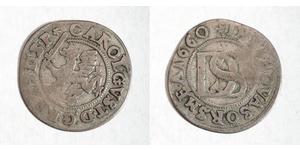
- The Sterling Groschen from Stettin (Szczecin): This silver piece was a staple currency for centuries. The obverse often depicted the reigning Duke or, later, Prussian Electors; however, it frequently features maritime shields indicating protection over shipping lanes.
- The Danzig Grosz: Perhaps more famous to global collectors than its Pomeranian neighbors (Gdańsk being a Polish port now), this coin represents the golden age of Hanseatic power. The reverse often bore an image that reflected local identity—sometimes maritime eagles or symbols of grain abundance.
- Silver Denars and Marks from Rügen: As part of Hither Pomerania, islands like Rügen produced their own distinct issues in the medieval period before they were fully incorporated into larger German entities. Collectors prize these for representing "micro-states" that existed within a federal region.
- The Brandenburg Thaler and Half-Thalers: Produced during the era of Prussian unification, silver coins from this period are technically superior due to higher fineness standards applied in the western German states. The designs often featured intricate portraits or heraldic shields unique to Western Pomerania's administrative districts.
Cultural Legacy
The numismatic legacy of Pomerenia is a testament to its identity as a land between cultures. Unlike regions that were dominated by one single empire without change, the coins from this area tell stories of conflict and cooperation.
You will see symbols of Slavic origins merged with German heraldry on later issues—a visual record of how Kashubia (inhabited by ethnic Kashubians) or other sub-regions like Kociewie existed within broader political structures. The artistry reflects the region's connection to nature; many coins bear images of wheat sheaves, flax plants, and sea birds that populate Pomeranian lakes.
The craftsmanship also reveals the skill level of local guilds in Western Pomerania compared to Brandenburg neighbors who used heavy presses rather than hand hammering. This evolution mirrors a technological shift common across Europe but accelerated here due to high trade volume through the port cities along the Baltic Ridge coastlines.
For collectors
Pomeranian coinage remains significant today for its rarity and historical depth. A well-preserved silver piece from 16th-century Pomerelia can be a treasure trove of history, reflecting ducal authority over trade routes that no longer exist.
The geographical split between Polish and German administration adds another layer to their appeal: finding coinage bearing the mint marks for both "Województwo Zachodniopomorskie" (West Pomeranian Voivodeship) and its counterparts in Mecklenburg-Western Pomerania offers a comprehensive view of Central European numismatics.
Scholarly study suggests that coins from this region often show evidence of specific local mint masters, making them excellent for provenance research. For the serious collector interested in maritime history or Hanseatic economics, these silver and copper pieces are not merely metal objects—they are tangible artifacts of a civilization built on the tides.
We invite you to examine your own collection with fresh eyes: look beyond the dates and consider what stories were carried across the Hel Peninsula or traded at the Vistula delta. Whether it is an early medieval silver token unearthed near Gdańsk Bay (Gdańska Zalew) or a Prussian thaler from Stettin's bustling 19th-century mint, Pomerania stands as one of Europe's most compelling chapters.